Best overall for Canberra roofs in 2026: soft washing. Best for heavy moss and lichen on concrete tile: high-pressure washing, used with caution. Best budget option: DIY zinc or chlorine spray. Best for heritage terracotta: roof steam cleaning. Best for a single stubborn patch: manual scraping.
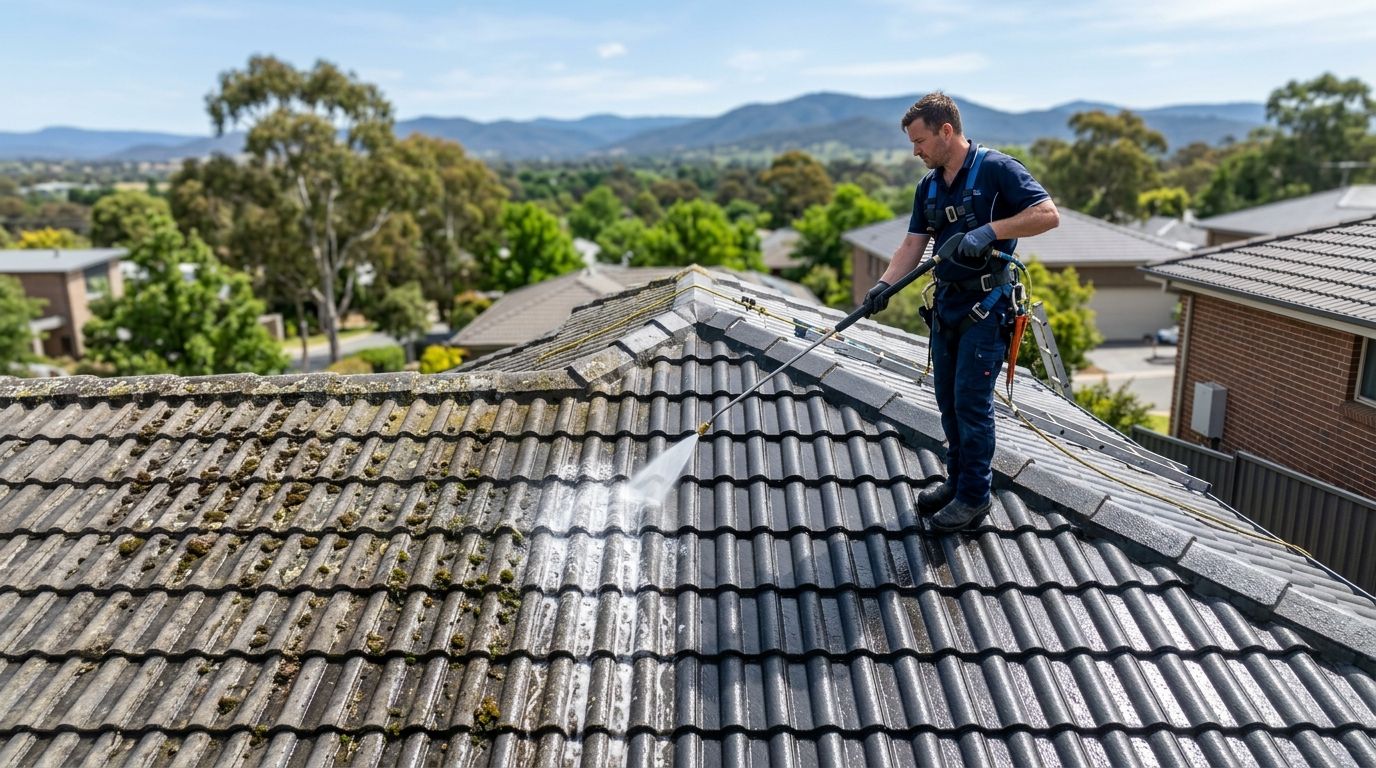
- Soft washing is the best roof cleaning method for most Canberra tile and Colorbond roofs in 2026 because it kills moss spores without cracking tiles.
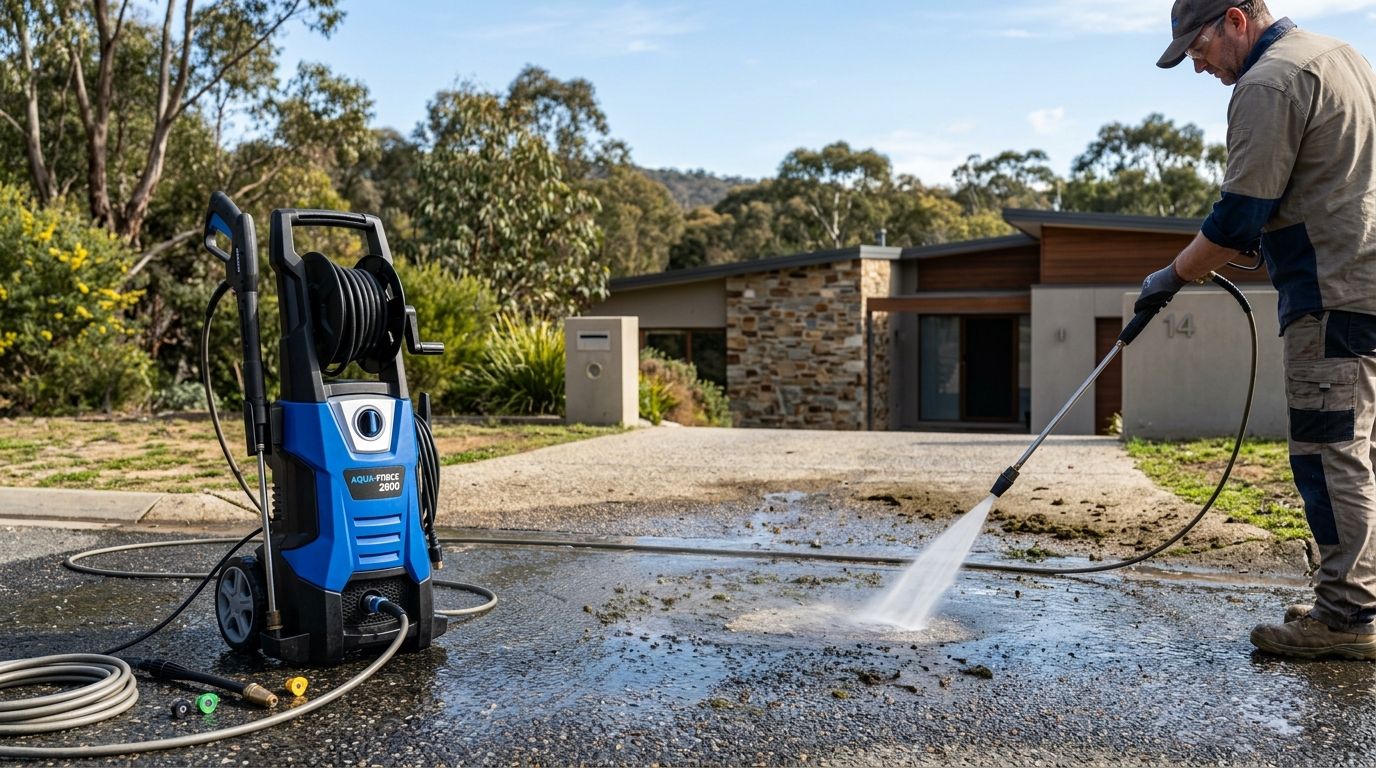
- High-pressure washing strips moss fastest but can crack aged concrete tile and voids some manufacturer warranties.
- Roof steam cleaning suits heritage terracotta where chemical runoff is restricted.
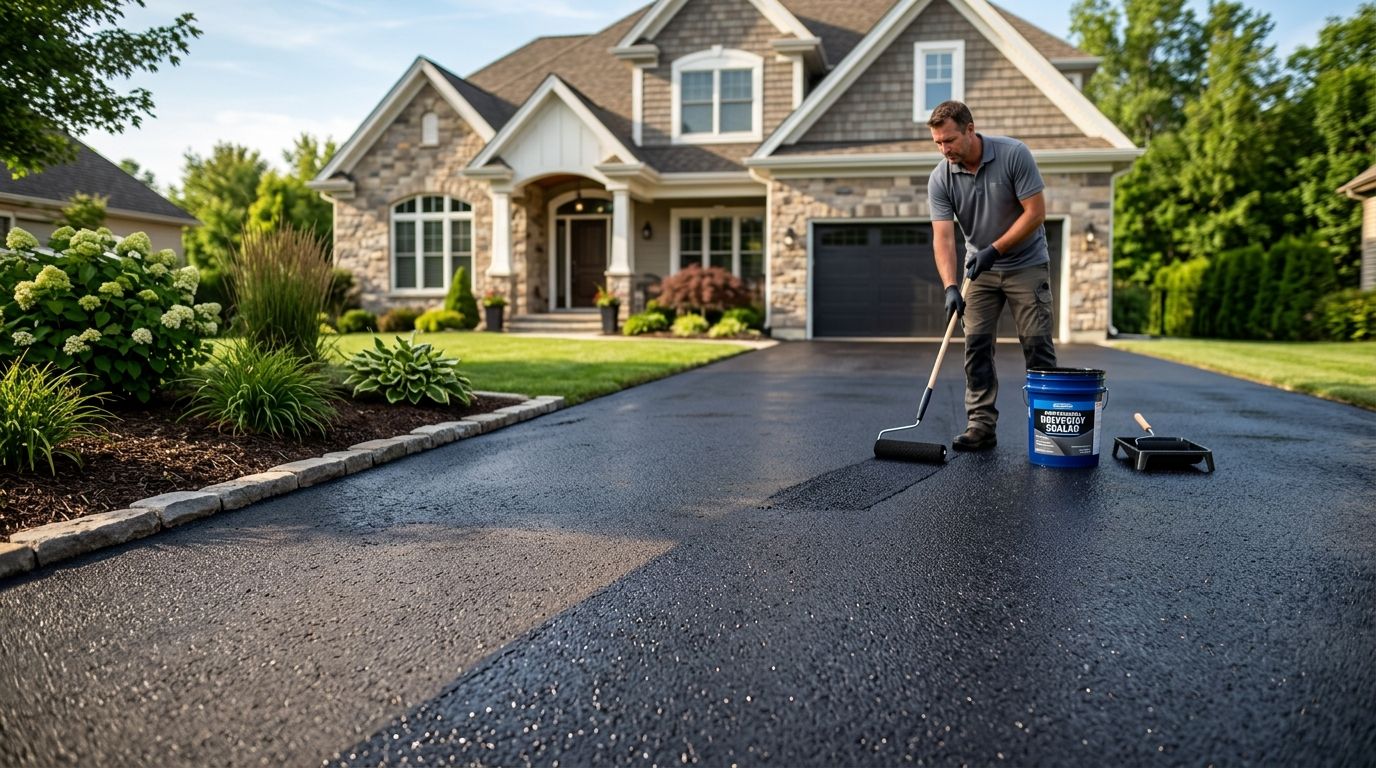
- DIY zinc or chlorine spray is the cheapest option but doesn't physically remove buildup and depends on rain.
- Manual scraping only makes sense for one small patch, not a whole roof.
Why this matters
Canberra's frost cycles and shaded southern roof pitches hold moisture longer than most Australian capitals, and that moisture is exactly what moss and lichen need to take hold on tile and metal roofs. Picking the wrong cleaning method doesn't just fail to fix the problem — it can crack century-old terracotta, strip a Colorbond coating, or send chemical runoff straight into a stormwater drain.
Clear Jet works on roofs across the ACT region every week and the same question comes up constantly: pressure wash it, or soft wash it? The answer depends on roof material, roof age, and how bad the buildup already is — not on whichever method a contractor happens to own the equipment for.
What makes the best roof cleaning method
- Roof material compatibility — terracotta, concrete tile and Colorbond metal each tolerate different pressure levels
- Runoff safety — whether the treatment is safe going into ACT stormwater drains and garden beds
- Effectiveness against regrowth — does it kill moss and lichen spores, or just remove the visible layer
- Risk of physical damage — cracked tiles, stripped glaze, lifted protective coatings
- How long results last before moss or algae reappears
- Time and labour required to get the whole roof done
At a glance: roof cleaning methods compared
| Method | Best for | Standout feature | Key limitation |
|---|---|---|---|
| Soft washing | Tile & Colorbond roofs with algae/lichen | Kills spores at the root, low pressure | Result builds over a day or two, needs a re-treatment schedule |
| High-pressure washing | Heavy moss buildup on concrete tile | Fastest visible strip-back | Can crack tiles or strip protective coating |
| Roof steam cleaning | Heritage terracotta, chemical-restricted sites | Zero chemical runoff | Slower coverage, fewer providers offer it |
| DIY zinc/chlorine spray | Light surface staining, tight budgets | Lowest upfront cost | No physical removal, depends on rain, runoff risk |
| Manual scraping | One or two isolated moss patches | No equipment cost | Labour-heavy, roof access risk, spores remain |
1. Soft washing: best roof cleaning method for tile and Colorbond roofs
Soft washing combines low water pressure with a biodegradable treatment designed to kill moss, lichen and black algae spores rather than blast the surface layer off. It's the approach Clear Jet applies to most residential roof jobs across Canberra because it works on aged terracotta and painted Colorbond without stripping the coating.
Soft washing pros:
- Safe on aged terracotta and concrete tile — no cracking risk
- Kills spores at the root, so regrowth is slower than surface-only methods
- Won't strip Colorbond coatings or void manufacturer warranties
- Lower-pressure runoff is gentler on gutters, garden beds and stormwater
Soft washing cons:
- Visible results build over a day or two, not instantly
- Needs a periodic re-treatment cycle to stay ahead of regrowth
- Less dramatic to watch than a pressure blast
Best for: homeowners with tile or Colorbond roofs who want the buildup gone without risking the roof surface. Verdict: Recommended as the default choice for Canberra roofs in 2026.
2. High-pressure washing: best for stripping heavy moss buildup fast
High-pressure washing uses a strong water jet to physically blast moss, lichen and grime off the roof surface. It gives the fastest visible transformation of any method on this list, which is why it's still requested often — but it's not roof-agnostic.
High-pressure washing pros:
- Immediate, dramatic visible result
- Very effective on thick, matted moss growth
- Works well on newer concrete tile roofs rated for it
High-pressure washing cons:
- Can crack aged or heritage terracotta tiles
- Strips paint and protective glaze from Colorbond and older tiles
- Doesn't kill spores, so moss often returns faster than after soft washing
Best for: newer concrete tile roofs with heavy moss and no heritage restrictions. Verdict: Situational — confirm your roof material can handle it before booking, and skip it entirely on terracotta or heritage-listed homes.
3. Roof steam cleaning: best for heritage terracotta roofs
Steam cleaning replaces chemicals and high pressure with high-temperature steam. It's a smaller niche in Canberra's roof cleaning market in 2026, but it solves a specific problem: heritage-listed and older terracotta roofs where chemical runoff isn't an option.
Steam cleaning pros:
- Zero chemical runoff into gardens or stormwater
- Gentle on fragile, aged terracotta
- Suits heritage-listed properties with runoff restrictions
Steam cleaning cons:
- Slower coverage across a full roof compared to washing methods
- Less effective on thick, established moss mats
- Fewer providers in the ACT offer it as a standard service
Best for: heritage terracotta roofs or properties under chemical-runoff restrictions. Verdict: Recommended for heritage jobs, situational everywhere else.
“If a roof cleaner reaches for a pressure washer before checking your roof material, that's the wrong call on terracotta and heritage tile.”
4. DIY zinc or chlorine spray: best budget option for light staining
A diluted zinc sulfate or chlorine solution sprayed onto the roof and left for rain to rinse off is the cheapest method on this list, and the one most homeowners try first. It's a reasonable option for light surface staining, not for established moss.
DIY spray pros:
- Lowest upfront cost of any method
- No equipment hire
- Reasonable for light, early-stage staining
DIY spray cons:
- Doesn't physically remove existing buildup
- Results depend entirely on rain to rinse the treatment off
- Runoff can affect garden beds and stormwater drains if not managed carefully
- Slow — results can take weeks to show
Best for: light surface discolouration on a low-pitch, easy-access roof. Verdict: DIY only — skip it for anything past light staining.
5. Manual scraping: best for one isolated moss patch
Scraping moss or lichen off tiles by hand or with a soft brush has zero equipment cost and gives precise control over a small area. It doesn't scale to a full roof.
Manual scraping pros:
- No equipment cost at all
- Precise on a single patch
- No chemical or water damage risk
Manual scraping cons:
- Labour-heavy and slow across a whole roof
- Roof access without proper harness or scaffolding is a real fall risk
- Doesn't remove spores, so the same patch tends to return
Best for: a single stubborn patch on an otherwise clean roof. Verdict: Skip for whole-roof jobs, fine for a spot fix.
Get your roof assessed before you choose a method
Clear Jet checks roof material and moss severity before recommending a method.
How we ranked these methods
Each method was weighed against the same four criteria: roof material compatibility, runoff safety, effectiveness against regrowth, and time or labour required. Soft washing ranks first because it's the only method that scores well on all four — it doesn't crack tiles, it's gentler on stormwater than a chemical spray left to run off untreated, and it kills spores instead of just knocking off the visible layer. High-pressure washing and steam cleaning both win on a single dimension — speed and chemical-free application respectively — which is why they hold narrower, situational positions rather than the top spot.
Which roof cleaning method should you choose?
For most Canberra homes with tile or Colorbond roofs in 2026, soft washing is the default choice — it's safe on the roof material, doesn't send harsh chemicals into stormwater, and knocks spores back at the source. Switch to steam cleaning if the property is heritage-listed terracotta with runoff restrictions. Reach for manual scraping only if you're dealing with one small patch, and treat high-pressure washing as a tool for newer concrete tile roofs that can actually handle it, not a default.
FAQ
What is the best roof cleaning method for Canberra homes in 2026?
Soft washing is the best roof cleaning method for most Canberra tile and Colorbond roofs in 2026. It uses low pressure plus a treatment that kills moss and lichen spores instead of just blasting off the visible growth.
Is high-pressure washing bad for roof tiles?
High-pressure washing can crack aged or heritage terracotta tiles and strip protective coatings off Colorbond and painted tile roofs. It's better suited to newer concrete tile roofs rated to handle the pressure.
How much does professional roof cleaning cost in Canberra?
Cost depends on roof size, pitch and how severe the moss or lichen buildup is. Check current quotes directly with a local provider rather than relying on a fixed figure.
How often should a Canberra roof be cleaned to prevent moss regrowth?
Frequency depends on roof aspect and shading — south-facing pitches that get less direct sun hold moisture longer and grow moss faster than north-facing sections. A soft-washed roof with a re-treatment schedule holds results longer than a one-off pressure blast.
Is soft washing safe for Colorbond roofs?
Yes. Soft washing uses low pressure and a biodegradable treatment, so it doesn't strip the factory coating the way high-pressure washing can.
Can I clean my roof myself?
Light surface staining can be treated with a DIY zinc or chlorine spray, but established moss buildup and full roof access carry real fall risk without proper harness or scaffolding.
Does roof cleaning affect stormwater drains in the ACT?
Chemical runoff from sprays and untreated pressure washing can enter stormwater drains and garden beds. Soft washing and steam cleaning are gentler options where runoff is a concern.
What's the difference between soft washing and pressure washing?
Soft washing uses low pressure plus a spore-killing treatment, while pressure washing uses high water pressure alone to physically strip buildup off the surface. Soft washing is gentler on tiles and lasts longer; pressure washing is faster but riskier on older or heritage roofs.
One last thing
The side of the roof that stays in shade the longest — usually the south-facing pitch in Canberra's climate — grows moss back faster than the sunnier side, no matter which method was used. If a roof cleaner isn't checking aspect and shading before quoting a method, that's worth asking about before 2026 work gets booked.