Same-day driveway cleaning is possible, but only with the right method. This guide ranks five driveway cleaning approaches by turnaround time so you know exactly what to expect before you book anyone in Canberra or the ACT.
- Professional hot-water pressure cleaning finishes a standard two-car driveway in 45-90 minutes with no dwell time.
- Oil and rust stains need chemical pre-treatment first, adding 15-30 minutes before the wash even starts.
- DIY pressure washer rental is the slowest option — plan a full day, not an hour.
- Sealing after cleaning adds real value but pushes total turnaround to 24-48 hours because the sealer has to cure.
- Driveway pressure washing turnaround time depends more on stain type and surface than on the machine itself.
Why this matters
A driveway job that should take an hour can blow out to a full day if the wrong method gets picked for the surface or the stain. Turnaround time is the single biggest variable homeowners underestimate when comparing driveway cleaning options in 2026.
If you're prepping a property for sale, coordinating a strata common area, or just want the car back on the driveway by lunchtime, the method matters as much as the price. Clear Jet runs hot-water pressure cleaning across Canberra and the ACT, and turnaround is the question asked most often before a booking is confirmed.
What makes the best driveway pressure washing turnaround
- Water temperature — hot water cuts through grease and oil in a single pass; cold water often needs a repeat pass
- Pre-treatment requirement — any stain needing chemical dwell time adds to the clock before cleaning even starts
- Surface type — exposed aggregate, pavers and stamped concrete each dry and cure at different rates
- Crew size and equipment — a two-person crew with a hot-water unit clears a driveway far faster than a single operator with a cold-water machine
- Weather dependency — wind and direct sun affect drying time and, for soft washing, chemical dwell time
- Post-clean sealing — adds protection but adds a mandatory cure window before the surface can take foot or car traffic
Driveway cleaning methods at a glance
| Method | Best for | Standout feature | Key limitation |
|---|---|---|---|
| Professional hot-water pressure cleaning | Same-day turnaround | Single-pass clean, ready to use immediately | Won't lift set-in oil or rust without pre-treatment |
| Chemical pre-treatment + pressure wash | Oil and rust stains | Breaks down stains a standard wash can't touch | Adds a dwell period before cleaning starts |
| Soft washing | Pavers and soft-surface driveways | Low pressure protects jointing sand and old concrete | Slower overall due to chemical dwell and rinse steps |
| DIY consumer pressure washer rental | Budget-conscious, one-off jobs | Lowest upfront cost | Full-day job with no guarantee on stain removal |
| Pressure clean + seal combo | Long-term protection | Extends time between cleans | 24-48 hour cure time before the driveway is usable |
1. Professional hot-water pressure cleaning: best for same-day turnaround
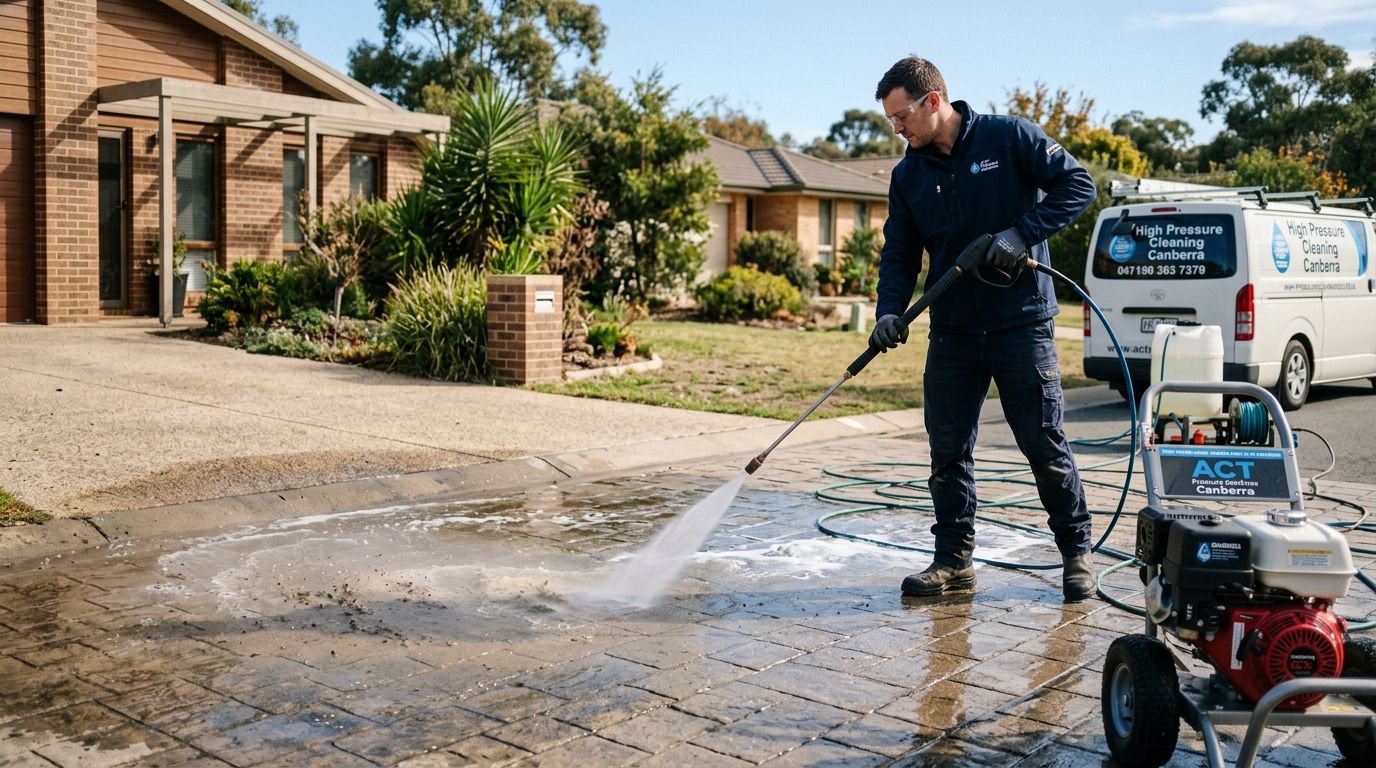
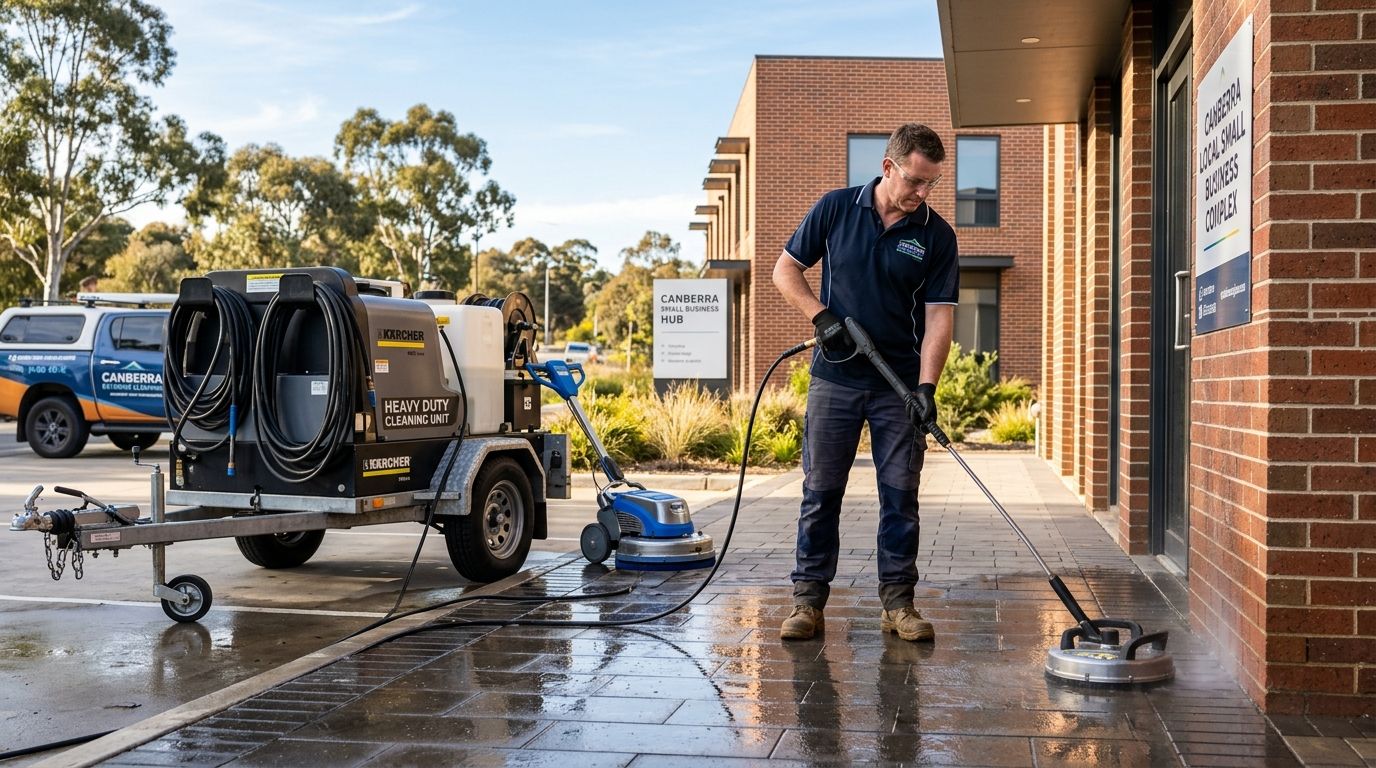
Hot-water pressure cleaning is what most Canberra homeowners picture when they book a driveway clean — a crew arrives with commercial-grade equipment, runs a single hot-water pass over the concrete or pavers, and the surface is dry and usable within the hour. The heat does the heavy lifting on grime and light oil residue that cold water just pushes around.
Clear Jet pros:
- Standard two-car driveway typically finishes in 45-90 minutes
- No chemical dwell time for general grime, moss or dirt build-up
- Surface is safe for foot and vehicle traffic almost immediately after drying
Clear Jet cons:
- Heavy oil stains or rust still need pre-treatment first
- Weather-dependent — heavy rain forecast same day can push the booking
Best for: homeowners who need the driveway back in service the same day. Verdict: Buy.
2. Chemical pre-treatment plus pressure wash: best for oil and rust stains
Some stains simply won't lift with water pressure alone, no matter how hot the water runs. A degreasing agent gets applied first, given 15-30 minutes to break down the oil or rust bond, then the hot-water pass removes it.
Pros:
- Handles stains that plain pressure washing leaves behind
- Still finishes within a single visit, usually under two hours total
- Prevents the stain reappearing as it wicks back up through untreated concrete
Cons:
- Adds 15-30 minutes to total job time versus a standard clean
- Some legacy stains need a second treatment on a later visit
Best for: driveways with old oil drips, tyre marks or rust from garden furniture. Verdict: Buy.
3. Soft washing: best for pavers and soft-surface driveways
Soft washing swaps pressure for chemistry — a lower-pressure application with a cleaning solution does the work, then a gentle rinse finishes the job. It's the right call on surfaces where high pressure risks damage: aged pavers, decorative aggregate, or driveways with loose jointing sand.
Pros:
- Protects jointing sand and softer paver surfaces from erosion
- Effective against moss, lichen and algae without abrasive pressure
- Lower risk of surface etching on decorative concrete
Cons:
- Chemical dwell time and a slower rinse process stretch total turnaround
- Not the fastest option when the only issue is general dirt build-up
Best for: older paver driveways or surfaces with moss and algae rather than oil stains. Verdict: Hold — worth it for the right surface, overkill for a straightforward dirt clean.
4. DIY consumer-grade pressure washer rental: best budget option
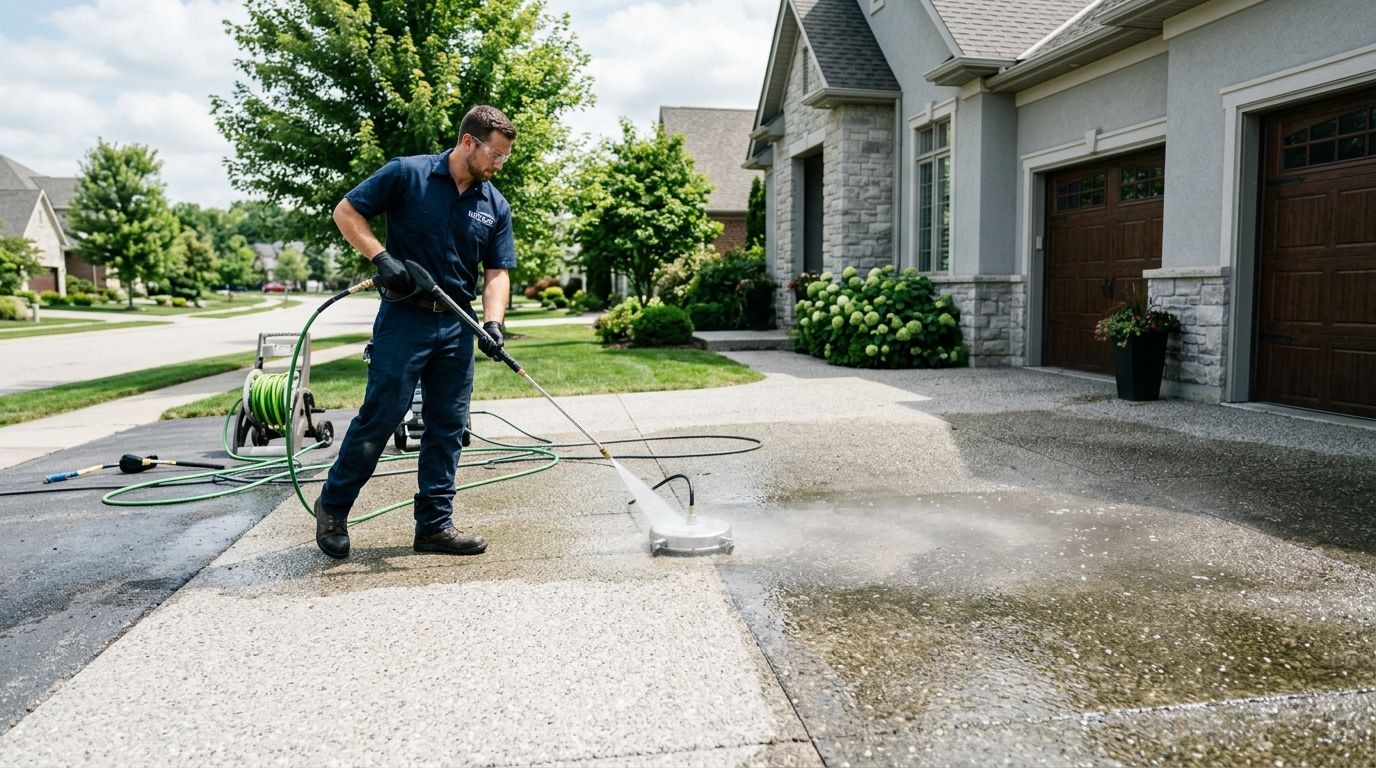
Renting a consumer pressure washer is the cheapest path on paper, but it's also the slowest by a wide margin. A domestic unit runs at a fraction of the pressure and flow rate of commercial equipment, so covering the same driveway area takes several passes.
Pros:
- No booking required, clean on your own schedule
- Works fine for light dirt on a small area
Cons:
- A full driveway can turn into a half-day or full-day project
- No pre-treatment for oil or rust means stains often stay put
- Inconsistent results without commercial-grade water pressure
Best for: small jobs, patios, or spot-cleaning between professional visits. Verdict: Skip if the driveway is a full standard size or has any stubborn staining.
5. Pressure clean and seal combo: best for long-term protection
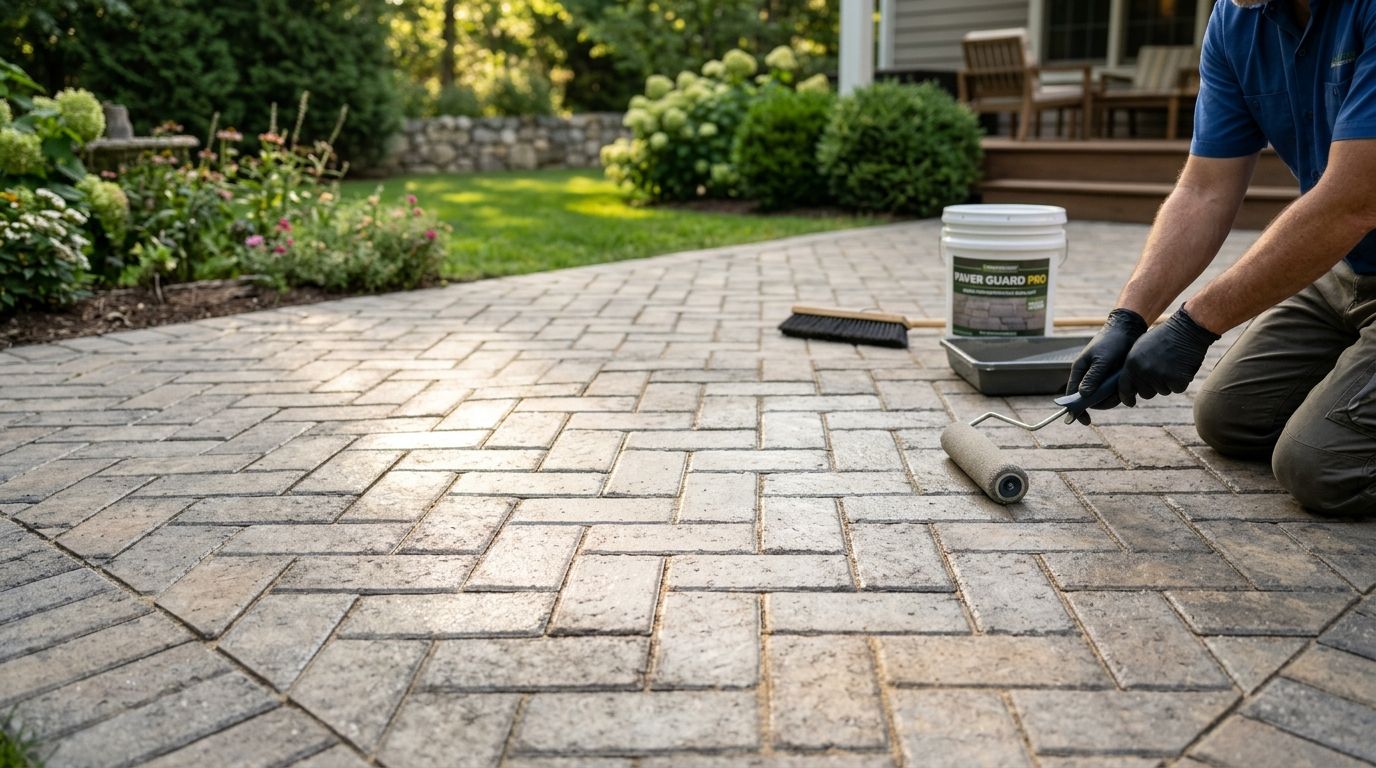
Sealing straight after a pressure clean locks in the result and slows how fast grime, oil and UV damage build back up. It's the method with the longest turnaround by design — the sealer needs a genuine cure window before the surface takes traffic again.
Check driveway sealer options suited to Canberra conditions before locking in a sealing timeline, since cure time varies by product.
Pros:
- Extends the interval between full cleans
- Reduces how deep future oil and grease stains penetrate
- Improves appearance retention on exposed aggregate and coloured concrete
Cons:
- 24-48 hours before the driveway can safely take car traffic again
- Adds a cost and time step beyond a standard clean
Best for: driveways going up for sale or ones with a history of repeat staining. Verdict: Buy if you have the 24-48 hour window to spare.
How we ranked these methods
Each method is ranked against the six criteria above — water temperature, pre-treatment need, surface type, crew and equipment, weather dependency, and whether sealing is involved. The ranking reflects total time from booking to a usable driveway, not just active cleaning minutes.
“The stain determines the turnaround, not the machine — a hot-water unit still needs a dwell period on set-in oil.”
Which driveway pressure washing method should you choose?
For most Canberra driveways with general dirt, algae and grime, professional hot-water pressure cleaning wins on turnaround — done and usable inside 90 minutes for a standard two-car driveway. If oil or rust stains are visible, expect a pre-treatment step added to that window rather than a separate visit.
Going the DIY route only makes sense for a small area with light dirt; anything beyond that turns into a full-day project with no guarantee on the stain. If the driveway is being prepped for sale or needs to hold its look for longer, budget the extra 24-48 hours for sealing after the wash — check the best pressure washers for Canberra driveways comparison if you're weighing the rental option against a professional booking.
Get your driveway back same day
Book a hot-water pressure clean across Canberra and the ACT.
FAQ
What is the average driveway pressure washing turnaround time?
A standard two-car driveway with hot-water pressure cleaning finishes in 45-90 minutes in 2026, with no dwell time needed for general dirt and grime.
Is hot-water pressure cleaning faster than a DIY pressure washer?
Yes. Commercial hot-water units clean a full driveway in under two hours, while a rented consumer unit can turn into a half-day or full-day project on the same area.
How long does it take to remove oil stains from a driveway?
Oil stains need chemical pre-treatment with 15-30 minutes of dwell time before the pressure wash starts, adding to the total visit but still finishing in a single booking.
Can I drive on my driveway right after pressure cleaning?
Yes, once the surface is dry after a standard hot-water clean, usually within the hour. A sealed driveway needs 24-48 hours before it takes car traffic again.
Is soft washing slower than pressure washing?
Soft washing takes longer overall because of chemical dwell time and a gentler rinse process, but it protects pavers and older concrete better than high pressure.
Does weather affect driveway cleaning turnaround?
Yes. Rain forecast on the day can delay a booking, and wind or direct sun changes drying time, particularly for soft washing where chemical dwell time matters.
Should I seal my driveway right after pressure cleaning?
Sealing straight after a clean extends how long the surface stays protected, but it adds a 24-48 hour cure window before the driveway can be used again.
One last thing
The fastest turnaround on paper isn't always the right call — a driveway with visible rust or oil that skips pre-treatment often needs a second visit anyway, which costs more time overall than budgeting the extra 15-30 minutes upfront. Ask about the stain before asking about the schedule.