Pressure cleaning strips years of grime, moss and efflorescence off a concrete or paver driveway — but a clean surface left unsealed starts absorbing oil, tannin stains and weather damage again within weeks. The best driveway sealer after pressure cleaning in 2026 depends on what the driveway is made of, how much traffic it takes and how glossy you want the finish to look.
- A penetrating/impregnating sealer is the best driveway sealer after pressure cleaning for most exposed concrete driveways in Canberra.
- Acrylic wet-look sealers give the strongest kerb-appeal boost but need reapplication every 1 to 3 years.
- Water-based acrylic sealers suit budget DIY jobs on low-traffic paths and side driveways.
- Epoxy and polyurethane sealers handle heavy vehicle traffic and commercial driveways best.
- Wait at least 24 to 48 hours after pressure cleaning before applying any sealer so the surface fully dries.
Best overall: penetrating/impregnating sealer. Best for kerb appeal: acrylic wet-look sealer. Best budget option: water-based acrylic sealer.
Why this matters
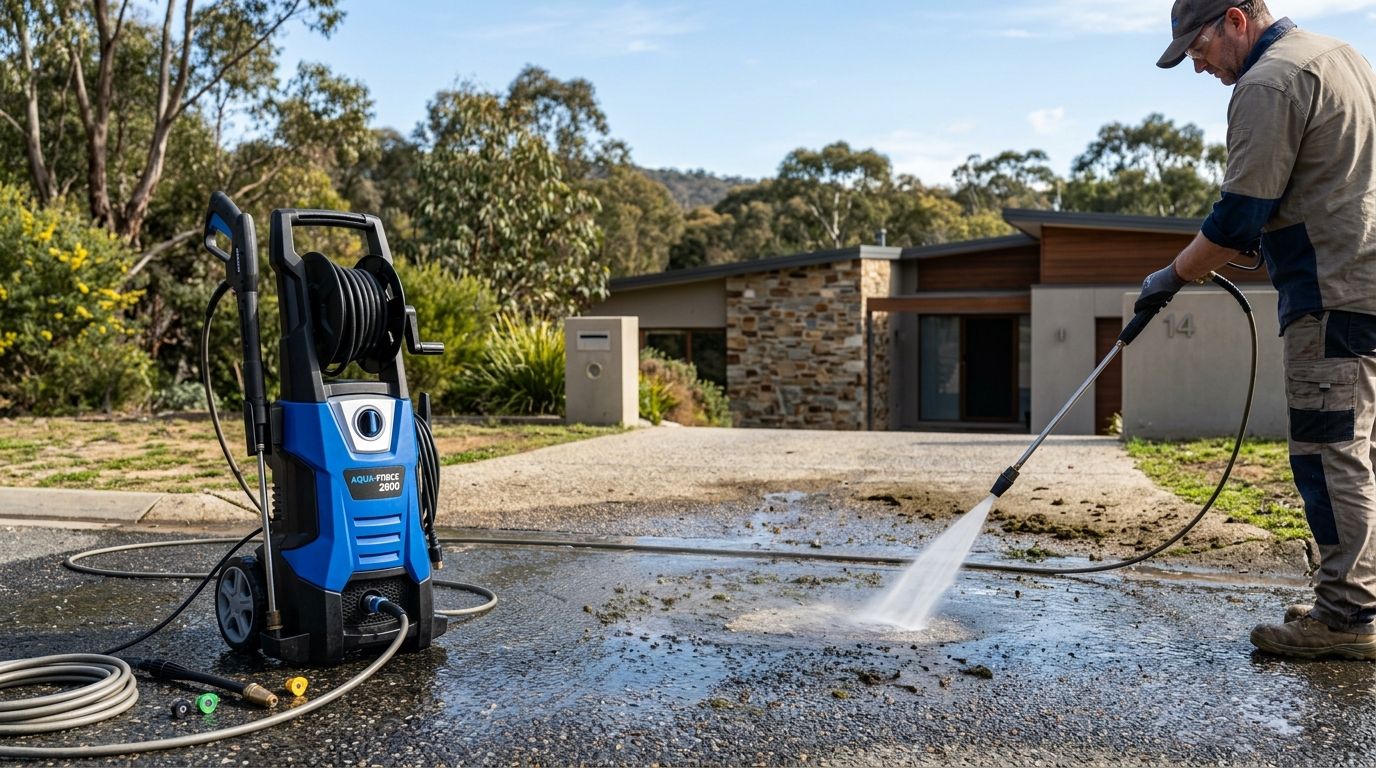
Sealing over dirt, algae or lime bloom traps the problem under a topcoat instead of removing it — the sealer bonds to the grime, not the concrete, and it fails early. That's why the order of operations matters as much as the product you pick.
A proper driveway pressure clean removes surface contaminants and opens the concrete's pores so sealer actually penetrates instead of sitting on top. Skip that step and even a premium sealer peels within a season.
Canberra's climate adds another variable. Cold, frosty winters and hot, dry, high-UV summers put more stress on a sealed surface than milder coastal climates, so sealer choice needs to account for both freeze cycles and sun exposure across the year.
What makes the best driveway sealer
- Breathability — lets moisture vapour escape from the slab instead of blistering the coating
- UV and colour stability — resists yellowing or fading under Canberra's high summer UV
- Slip resistance — matters most on ramps, garage aprons and pool-adjacent paving
- Cure-time compatibility — how soon it can go down after pressure cleaning and any acid etch
- Gloss level — matte natural look versus wet-look gloss for kerb appeal
- Reapplication interval — how often you'll be back out there redoing the job
Driveway sealers at a glance
| Sealer type | Best for | Standout feature | Key limitation |
|---|---|---|---|
| Penetrating/impregnating sealer | Exposed concrete driveways | Invisible finish, breathable | Doesn't change gloss or colour |
| Acrylic wet-look sealer | Pre-sale kerb appeal | High-gloss, colour-enhancing | Needs frequent reapplication |
| Water-based acrylic sealer | Budget DIY jobs | Easy application, low odour | Shorter lifespan than solvent-based |
| Epoxy/polyurethane sealer | High-traffic commercial driveways | Heavy-duty abrasion resistance | Can trap moisture if applied wrong |
| Silicone/siloxane water repellent | Pavers and exposed aggregate | Preserves natural stone look | Minimal gloss or colour change |
1. Penetrating/impregnating sealer: best driveway sealer for exposed concrete
A penetrating sealer soaks into the concrete's pore structure and reacts chemically to block water and salt without sitting as a film on the surface. It leaves the natural grey or coloured concrete look intact, which is why it's the standard pick for plain exposed driveways after pressure cleaning.
Penetrating sealer pros:
- Breathable — vapour escapes so it won't blister or peel like a film-forming coating
- Long reapplication cycle, often 5 to 10 years depending on traffic and exposure
- Doesn't change slip resistance, so it's safe on ramps and steep driveways
- Works on both plain and coloured concrete
Penetrating sealer cons:
- Doesn't enhance colour or add gloss — no kerb-appeal boost
- Harder to tell visually whether the job was done properly
Best for: homeowners who want protection without changing the driveway's appearance. Verdict: Buy.
2. Acrylic wet-look sealer: best driveway sealer for pre-sale kerb appeal
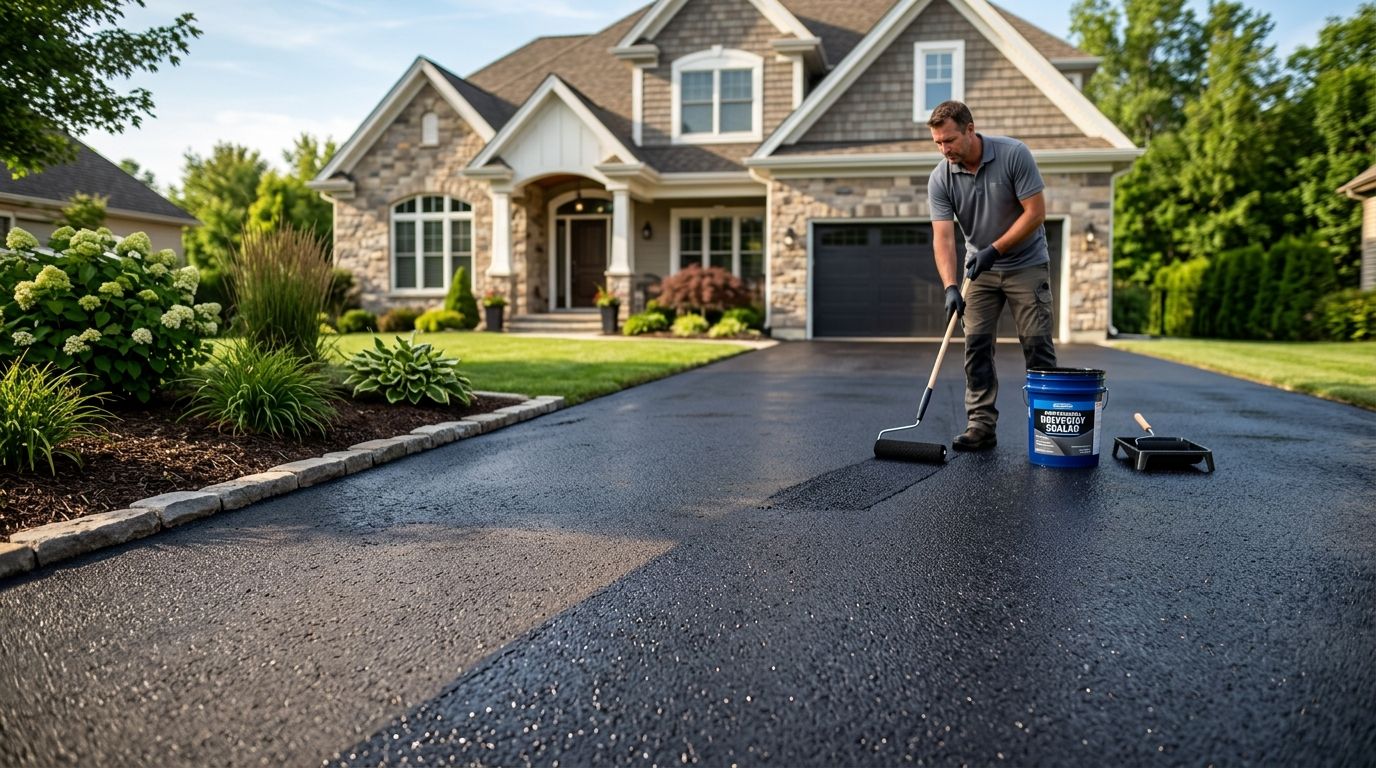
An acrylic wet-look sealer forms a glossy film on top of the concrete or pavers, deepening the colour and giving a just-washed sheen that photographs well for real estate listings. It's a topical coating, not a penetrant, so it sits on the surface rather than soaking in.
Acrylic wet-look sealer pros:
- Strongest visual upgrade of any sealer type — deepens colour and adds shine
- Good short-term protection against staining and light traffic wear
- Available in solvent-based formulas with faster cure for tight sale timelines
Acrylic wet-look sealer cons:
- Needs reapplication every 1 to 3 years — the shortest cycle on this list
- Can become slippery when wet, so it's a poor choice on ramps or pool surrounds
- Film-forming coatings can trap moisture and blister if the slab wasn't fully dry
Best for: sellers and homeowners prioritising street appearance over long-term maintenance. Verdict: Buy if you're selling within the next year; Hold if you want a low-maintenance driveway.
3. Water-based acrylic sealer: best driveway sealer for budget DIY jobs
Water-based acrylics give a lighter version of the wet-look finish with easier application, lower odour and faster clean-up, which makes them the common DIY choice for side driveways, paths and low-traffic areas.
Water-based acrylic sealer pros:
- Easiest of the film-forming sealers to apply with a roller
- Low odour, suitable for occupied properties and same-day re-entry in most cases
- Reasonable option for low-traffic secondary driveways or footpaths
Water-based acrylic sealer cons:
- Shorter lifespan and lower gloss retention than solvent-based acrylic
- Not built for daily vehicle traffic on a main driveway
Best for: low-traffic paths and driveways where cost and ease of application matter more than longevity. Verdict: Hold for main driveways, Buy for secondary paved areas.
4. Epoxy/polyurethane sealer: best driveway sealer for high-traffic commercial use
Epoxy and polyurethane sealers are the heavy-duty end of the category, built for driveways and hardstands that take constant vehicle turnover — think shared driveways, commercial forecourts and strata car parks.
Epoxy/polyurethane sealer pros:
- Highest abrasion and chemical resistance of any option on this list
- Reapplication cycle of 10+ years under normal traffic
- Handles oil, fuel and tyre-mark staining better than acrylic coatings
Epoxy/polyurethane sealer cons:
- Overkill and needlessly costly for a standard residential driveway
- Can trap moisture and delaminate if applied over a slab that isn't fully cured and dry
Best for: commercial properties and shared or heavy-traffic driveways. Verdict: Buy for commercial applications; Skip for a standard residential driveway.
5. Silicone/siloxane water repellent: best driveway sealer for pavers and exposed aggregate
Silicone and siloxane sealers are penetrating water repellents built specifically for porous surfaces like clay pavers, natural stone and exposed aggregate, where you want water resistance without altering the texture or look.
Silicone/siloxane sealer pros:
- Preserves the natural texture and colour of pavers and aggregate
- Highly breathable, low risk of blistering on porous surfaces
- Good match for surfaces already cleaned and re-sanded after pressure cleaning
Silicone/siloxane sealer cons:
- Minimal gloss or colour enhancement compared with acrylic options
- Less effective on smooth broom-finished concrete than on porous paving
Best for: paver driveways, exposed aggregate and natural stone surfaces. Verdict: Buy for paved and aggregate driveways.
How this list was ranked
Each sealer type was ranked against the six criteria above — breathability, UV stability, slip resistance, cure-time compatibility, gloss level and reapplication interval — then matched to the surface and use case it performs best on, rather than forced into a single leaderboard. That's why a penetrating sealer tops the list for plain concrete while a paver driveway calls for silicone or siloxane instead.
Getting the surface right before any sealer goes down still matters more than the sealer brand. A driveway cleaned with the right pressure washer setup for Canberra driveways dries faster and etches more evenly, which gives any sealer a better bond regardless of which type you choose.
Get your driveway ready for sealing
Professional pressure cleaning preps the surface so sealer actually bonds.
Which driveway sealer should you choose?
For a standard exposed concrete driveway in 2026, a penetrating/impregnating sealer is the default recommendation — it protects for 5 to 10 years, doesn't change the look, and stays breathable through Canberra's frost-to-heatwave swing. Choose acrylic wet-look sealer only if kerb appeal for a sale or event outweighs the shorter 1 to 3 year reapplication cycle. Paver and exposed-aggregate driveways should skip acrylic altogether and go straight to a silicone or siloxane water repellent.
Whatever type you land on, don't apply it straight after cleaning. Let the slab dry a full 24 to 48 hours minimum, longer in humid or shaded conditions, so moisture isn't sealed in under the coating.
FAQ
What's the best driveway sealer after pressure cleaning?
A penetrating or impregnating sealer is the best driveway sealer after pressure cleaning for most exposed concrete driveways, since it protects the slab without changing its look and lasts 5 to 10 years. Paver and aggregate driveways do better with a silicone or siloxane water repellent instead.
How long should you wait after pressure cleaning before sealing a driveway?
Wait at least 24 to 48 hours after pressure cleaning so the concrete or pavers are fully dry before applying any sealer. Shaded or humid areas of the driveway may need longer to dry through completely.
Do you need to seal a driveway after pressure cleaning?
Sealing isn't mandatory, but an unsealed driveway starts absorbing oil, tannin stains and grime again within weeks of being cleaned. Sealing locks in the clean finish and extends the time before the next full clean is needed.
Is acrylic or penetrating sealer better for concrete driveways?
Penetrating sealer is better for long-term, low-maintenance protection on plain concrete driveways because it lasts longer and stays breathable. Acrylic wet-look sealer is better when you want a glossier, darker finish for kerb appeal, but it needs reapplication every 1 to 3 years.
How often should a sealed driveway be resealed?
Acrylic sealers typically need reapplication every 1 to 3 years, penetrating sealers every 5 to 10 years, and epoxy or polyurethane sealers can go 10 or more years under normal traffic. Reseal sooner if you notice water no longer beading on the surface.
Can you seal a paver driveway the same way as a concrete driveway?
No — pavers and exposed aggregate do better with a silicone or siloxane water repellent that preserves the natural texture, rather than a film-forming acrylic coating. Acrylic sealers can trap moisture between pavers and cause efflorescence.
Does sealing a driveway make it slippery?
Film-forming sealers like acrylic wet-look products can become slippery when wet, especially on ramps or slopes. Penetrating and siloxane sealers don't add a surface film, so they don't change slip resistance.
How much does it cost to reseal a driveway in Canberra?
Cost depends on the sealer type, driveway size and whether cleaning and prep are included, so it varies job to job. Get a quote from a local pressure cleaning and sealing provider once you know the driveway's surface type and condition.
One last thing
Most driveway sealer failures in Canberra trace back to timing, not product quality — sealer applied while the slab still holds moisture from cleaning or overnight dew blisters within a season regardless of brand. Test dryness with a plastic sheet taped to the surface overnight: condensation underneath means the concrete isn't ready yet.