Small businesses across Canberra and the ACT keep asking the same question before spring: buy commercial exterior cleaning equipment or pay someone to turn up with it already loaded on a ute. This guide ranks the equipment categories worth owning in 2026, tells you where each one runs out of steam, and flags the point where hiring a crew beats the servicing bill.
- Hot-water diesel pressure washers rank best overall for grease-heavy loading docks and bin areas in 2026.
- Cold-water electric units suit compact shopfronts but stall on baked-on grime and painted render.
- Soft wash rigs protect signage and painted surfaces that high-pressure gear can strip back.
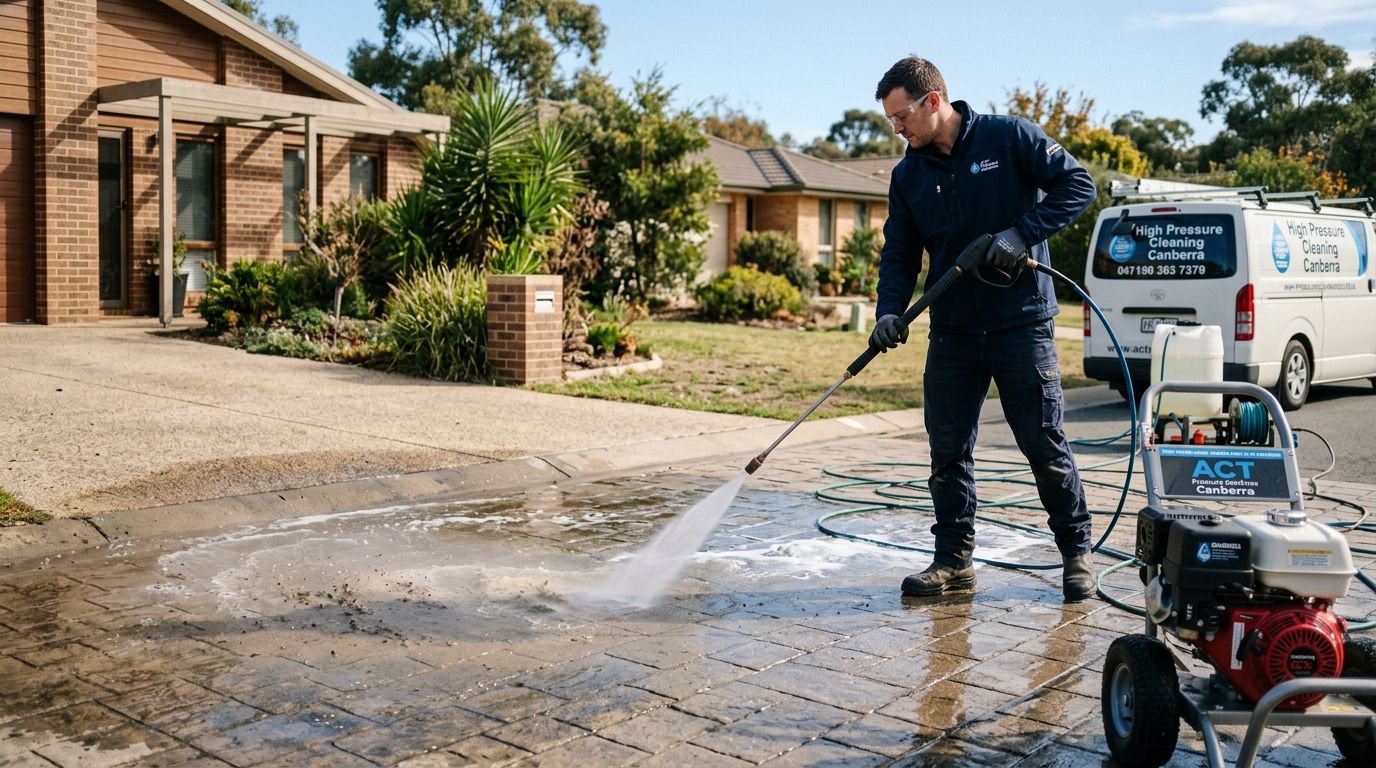
- Hiring a commercial exterior cleaning service like Clear Jet skips the diesel, storage and servicing costs entirely.
- Ride-on scrubber-dryers only pay off once a car park or forecourt runs past a few hundred square metres.
Why this matters
A small business in Canberra doesn't clean exteriors every day, but the frontage still has to look presentable through frost, dust storms and the jacaranda drop every November. Buying commercial exterior cleaning equipment is a capital decision with a maintenance tail attached to it, not a one-off purchase.
Get the category wrong and you end up with a machine that's either too weak for your grease trap apron or too aggressive for your rendered shopfront. Clear Jet sees both mistakes regularly on commercial callouts across the ACT, usually after someone's tried the DIY route first.
What makes the best commercial exterior cleaning equipment
- Water temperature capability – cold water handles dust and light grime; hot water is what actually lifts grease and oil stains.
- Flow rate matched to the surface – raw pressure (PSI) matters less than litres per minute when you're covering a large forecourt.
- Power source and portability – mains electric is quiet and cheap to run but ties you to a cord; diesel and petrol units go anywhere.
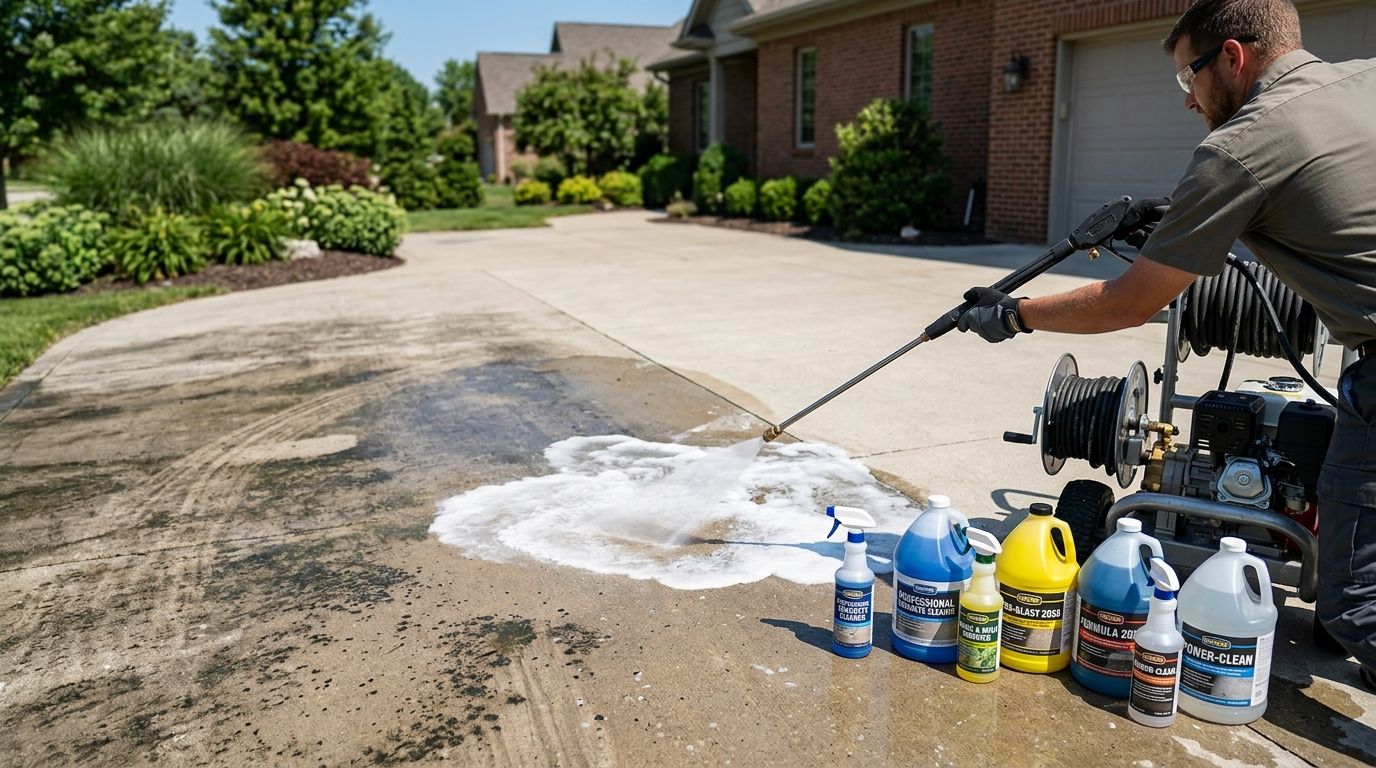
- Chemical compatibility – degreasers, sanitisers and mould treatments need a rig built to handle them, not just plain water.
- Storage and servicing through winter – Canberra frosts crack pumps and hoses left with water sitting in them overnight.
- Total cost of ownership – purchase price is the smallest number; fuel, servicing, storage and staff time add up fast.
Commercial exterior cleaning equipment at a glance
| Equipment | Best For | Standout Feature | Key Limitation |
|---|---|---|---|
| Cold-water electric pressure washer | Compact shopfronts and entryways | Quiet, low running cost, no fuel to store | Struggles on baked-on grease and heavy oil |
| Hot-water diesel/electric pressure washer | Loading docks and grease-heavy areas | Hot water breaks down oil that cold water pushes around | Heavier unit, higher fuel and servicing cost |
| Petrol pressure washer | Large sites without mains power | Goes anywhere a ute can park | Loud, needs fuel management and regular servicing |
| Soft wash rig | Painted render, signage, cladding | Low pressure plus chemical treatment protects finishes | Slower per square metre than high-pressure gear |
| Ride-on scrubber-dryer | Expansive concrete car parks and forecourts | Covers large flat areas fast with one operator | Overkill and expensive for small sites |
| Professional pressure cleaning service (Clear Jet) | Businesses that want zero equipment overhead | No capital outlay, no storage, no servicing schedule | Recurring per-visit cost instead of a one-time purchase |
1. Cold-water electric pressure washer: best for compact shopfronts
A cold-water electric unit plugs into a standard power point and pushes water at pressures that lift dust, cobwebs and light surface grime off glass, tiles and small paved entries. It's the entry point most small retail and office tenancies reach for first because it's quiet enough to run during trading hours.
Cold-water electric pressure washer pros:
- Low running cost with no fuel to buy or store
- Quiet enough for use near customers or neighbouring tenants
- Compact footprint that fits in a storeroom
Cold-water electric pressure washer cons:
- Cord length limits reach on larger frontages
- Cold water alone won't shift grease around bin stores or kitchen exhausts
- Underpowered for anything beyond light-duty cleaning
Best for: small shopfronts, glass entries and light paved areas. Verdict: Buy if your exterior cleaning need is genuinely light and occasional.
2. Hot-water diesel pressure washer: best for grease-heavy loading docks
Hot-water units heat the water before it hits the surface, which is what actually emulsifies grease, oil and food residue instead of just spreading it thinner. Cafés, mechanics and warehouses with loading docks are the businesses that see the biggest jump in results moving from cold to hot water.
Hot-water diesel pressure washer pros:
- Cuts through oil and grease that cold water can't touch
- Faster on stubborn commercial stains, meaning fewer passes
- Works well paired with a commercial-grade degreaser
Hot-water diesel pressure washer cons:
- Heavier and bulkier than a cold-water unit, harder to store
- Diesel burner needs regular servicing to stay compliant and safe
- Highest upfront cost of any DIY option on this list
Best for: loading docks, kitchen exteriors and grease traps. Verdict: Buy only if grease removal is a recurring, not occasional, problem for the business.
3. Petrol pressure washer: best for sites without mains power
A petrol unit runs independent of any power point, which matters for construction sites, rural commercial properties or anywhere the closest outlet is a long extension lead away. Canberra's outer business parks and rural fringe properties are where this category earns its keep.
Petrol pressure washer pros:
- No cord, no dependency on mains power
- Portable enough to move between multiple sites in one day
- Generally strong pressure output for the size of the unit
Petrol pressure washer cons:
- Louder than electric equivalents, a problem near occupied tenancies
- Needs fuel storage, spark plug checks and regular servicing
- Exhaust fumes rule out use in enclosed loading bays
Best for: rural commercial sites and multi-location contractors. Verdict: Hold unless mains power access is a genuine, recurring obstacle.
4. Soft wash rig: best for painted or rendered exteriors
A soft wash system pairs low pressure with a cleaning solution, usually a diluted sodium hypochlorite or biodegradable mould treatment, so it kills mould and lifts stains without stripping paint or eroding render. High-pressure equipment on a painted commercial facade often does more damage than the dirt it was meant to remove.
Soft wash rig pros:
- Protects paint, render and signage that pressure alone would strip
- Kills mould and algae at the root rather than just blasting it off
- Gentler on ageing brickwork and heritage-style facades
Soft wash rig cons:
- Slower coverage per square metre than a straight pressure washer
- Chemical handling and dilution ratios need to be right, every time
- Not effective on compacted dirt or oil stains
Best for: painted shopfronts, cladding and signage-heavy exteriors. Compare it directly against high-pressure methods before you commit — see soft wash vs pressure wash options for house exteriors for how the two stack up on residential-style surfaces. Verdict: Buy if your building's finish is paint or render, not bare concrete or brick.
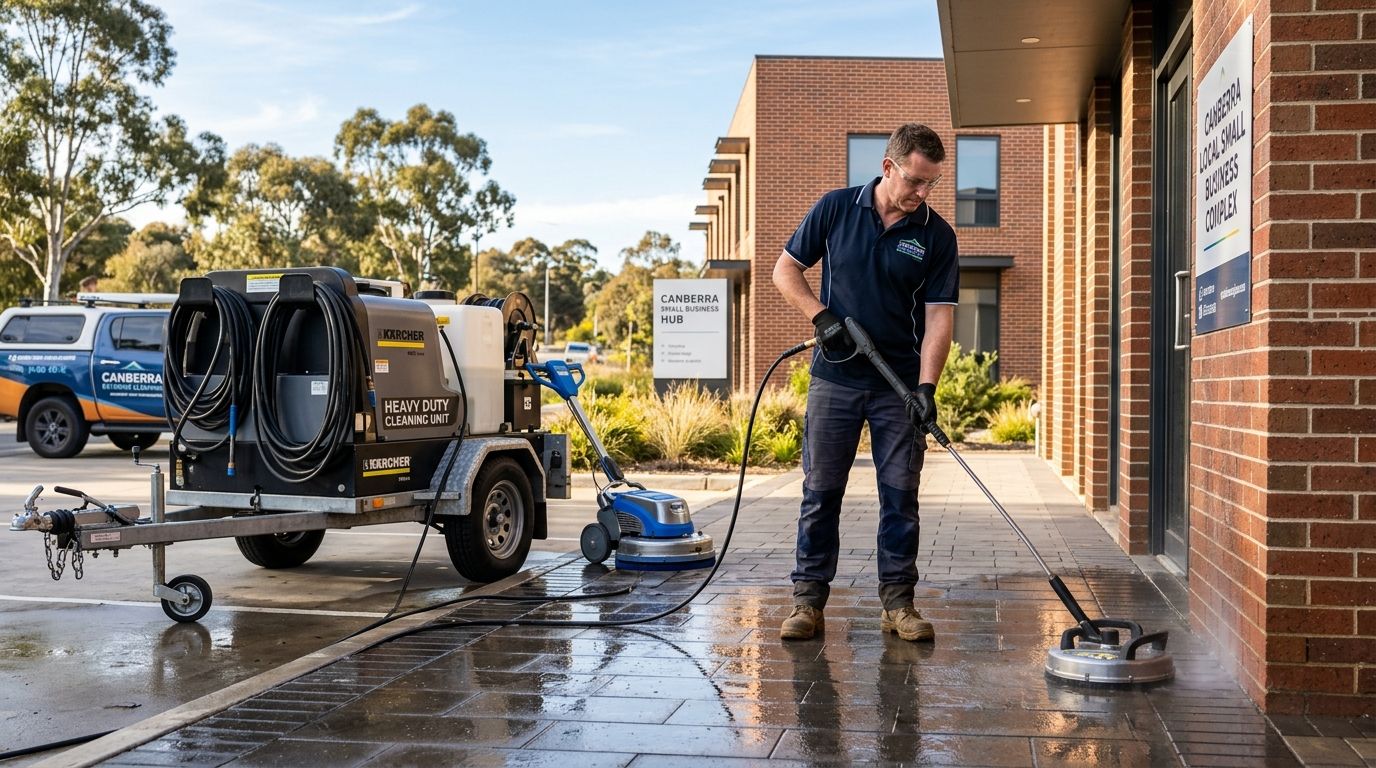
5. Ride-on scrubber-dryer: best for large car parks and forecourts
A ride-on scrubber-dryer covers flat concrete or asphalt fast, scrubbing and vacuuming up the dirty water in one pass rather than leaving it to run off. It's built for scale — car parks, warehouse forecourts and shopping centre aprons, not a single shopfront.
Ride-on scrubber-dryer pros:
- Covers hundreds of square metres per hour with one operator
- Recovers dirty water instead of letting it run into stormwater
- Consistent finish across large flat surfaces
Ride-on scrubber-dryer cons:
- Expensive and unnecessary for anything under a few hundred square metres
- Needs dedicated storage space and regular battery or fuel maintenance
- Overkill for anything with kerbs, garden beds or tight corners
Best for: large forecourts and multi-tenant car parks. Verdict: Skip unless your site genuinely runs into the hundreds of square metres.
6. Professional pressure cleaning service (Clear Jet): best for zero equipment overhead
Hiring a commercial pressure cleaning service means someone else owns the diesel unit, the soft wash chemicals, the servicing schedule and the compliance headaches. Clear Jet covers driveway, paver, roof, graffiti removal and commercial exterior cleaning across Canberra and the ACT, matching the method to the surface rather than making one machine do everything.
Professional pressure cleaning service pros:
- No capital outlay, no storage space taken up by equipment
- No servicing schedule, fuel management or chemical handling on your books
- Access to hot water, soft wash and high-pressure methods without buying all three
Professional pressure cleaning service cons:
- Recurring per-visit cost instead of a single purchase
- Requires booking ahead rather than cleaning on demand
Best for: small businesses that want their exterior handled without adding equipment to the asset register. Full scope is on the commercial pressure cleaning services in Canberra page. Verdict: Buy the service if equipment maintenance isn't something anyone on staff has time for.
How we ranked
Each option was weighed against the six criteria above: water temperature capability, flow rate for the surface, power source, chemical compatibility, storage and servicing burden through a Canberra winter, and total cost of ownership rather than sticker price alone. Items lower on the list solve narrower problems — that's a feature of an honest ranking, not a flaw.
“The real cost of DIY exterior cleaning isn't the machine — it's the fuel, the servicing, and the storage space it takes up for the eleven months a year you're not using it.”
Which commercial exterior cleaning equipment should you choose?
If grease is the recurring problem, buy a hot-water unit. If your building is painted or rendered, a soft wash rig protects the finish that high pressure would ruin. Everyone else — anyone without a dedicated maintenance person and a place to store diesel gear through 2026 — comes out ahead hiring a commercial pressure cleaning service instead of adding another asset to look after.
Skip the equipment, book the crew
Clear Jet handles commercial exterior cleaning across Canberra and the ACT.
FAQ
What's the best commercial exterior cleaning equipment for a small Canberra business?
For most small businesses in 2026, a hot-water pressure washer handles grease-heavy areas best, while a soft wash rig protects painted or rendered facades. Businesses without space to store or service equipment usually come out ahead hiring a commercial pressure cleaning service instead.
Is hot water pressure washing better than cold water for commercial sites?
Hot water breaks down grease and oil far more effectively than cold water, which mostly just spreads the residue around. Cold water is fine for dust and light grime on shopfronts and glass entries.
Do I need a soft wash system or a pressure washer for a painted shopfront?
A soft wash system is the safer choice for painted, rendered or signage-heavy exteriors because high pressure can strip paint and erode render. Pressure washers suit bare concrete, brick and paving instead.
How do I stop a pressure washer freezing over a Canberra winter?
Run the pump dry and disconnect the hose before storing the unit, then keep it somewhere above freezing overnight. Water left sitting in the pump or hose over a Canberra frost is the most common cause of cracked components.
Is it cheaper to buy exterior cleaning equipment or hire a service?
Buying makes sense once the same task recurs often enough to justify fuel, servicing and storage costs on top of the purchase. Occasional or seasonal cleaning is usually cheaper to outsource to a commercial exterior cleaning service.
What size car park needs a ride-on scrubber-dryer instead of a pressure washer?
Ride-on scrubber-dryers only make sense once a forecourt or car park runs into the hundreds of square metres. Below that, a hot or cold water pressure washer covers the area faster relative to the equipment cost.
Can commercial exterior cleaning equipment damage pavers or driveways?
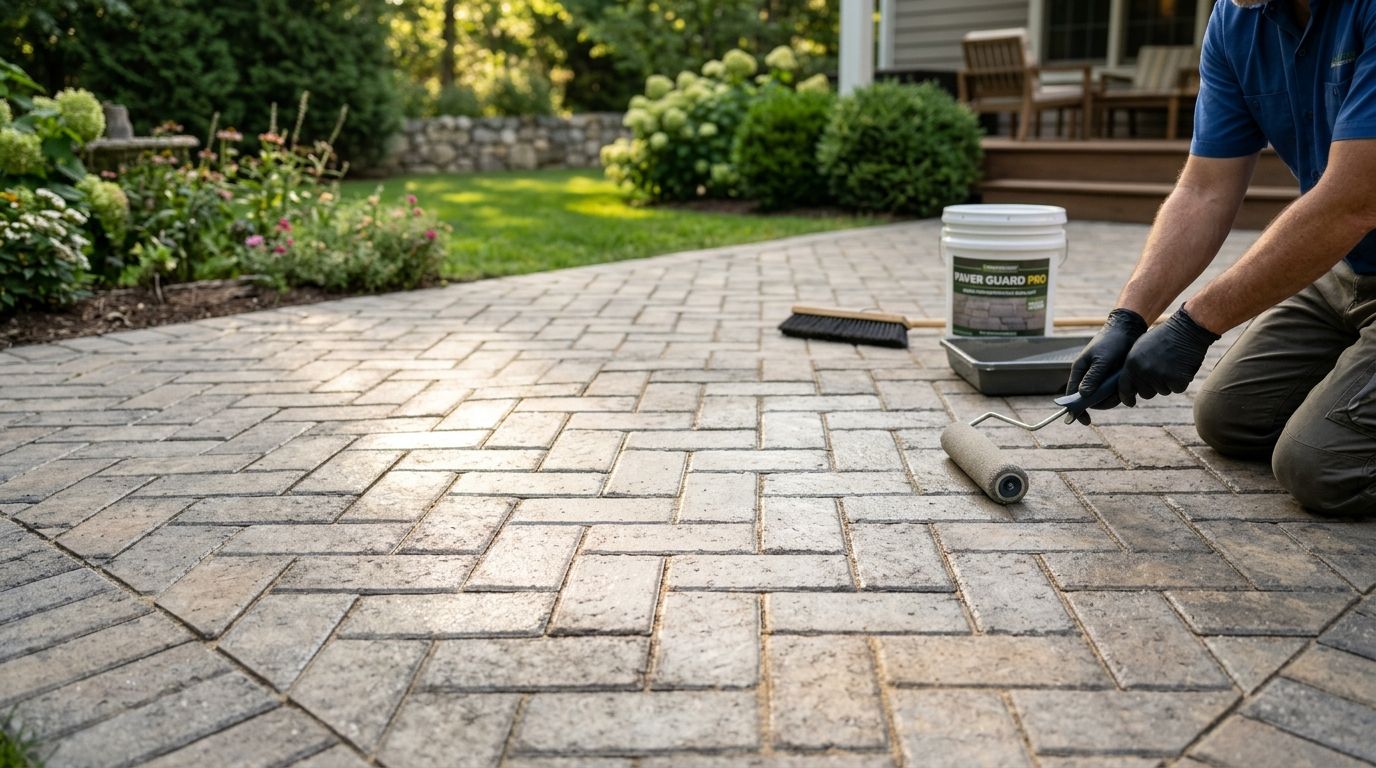
Yes, pressure set too high or held too close to the surface can etch pavers and strip jointing sand. Matching flow rate and distance to the surface, not just cranking up PSI, avoids most of the damage.
One last thing
Most equipment failures on commercial-grade units around Canberra trace back to one habit: leaving water sitting in the pump and hose overnight through winter, then wondering why the seals crack by August. Run the unit dry before you pack it away, every single time, regardless of which category you buy in 2026.