Soft washing and pressure washing solve different problems, and picking the wrong one is how homeowners end up with stripped paint, cracked render, or a driveway that still looks grubby. This guide ranks the five real options for house exteriors in Canberra and the ACT in 2026, tells you what each one is actually built for, and where it falls short.
- Soft washing wins overall for painted weatherboard, render and Colorbond roofs where high pressure risks damage.
- Hot water pressure washing is the pick for driveways, pavers and oil or grease stains that soft washing can't shift.
- Cold water pressure washing is the budget option for bare concrete paths and timber fences with no delicate coating.
- A combination clean (soft wash plus pressure wash) is the standard for full pre-sale exterior packages in 2026.
- DIY pressure washer rental is the riskiest option and the wrong call for anything beyond a single small surface.
Why this matters
Getting soft wash vs pressure wash wrong is expensive to undo. Blast a painted weatherboard house at 3000 PSI and you strip paint film and force water behind cladding; try to soft wash a driveway covered in oil and tyre marks and the surface stays dirty because there's no mechanical force to lift the stain.
The two methods aren't competing for the same job. Soft washing is a chemical clean at low pressure; pressure washing is a mechanical clean at high pressure. The right choice depends entirely on the surface, not on which sounds more thorough.
What makes the best soft wash vs pressure wash option
- Surface compatibility — does the method match render, paint, Colorbond, timber, concrete or pavers without damage risk
- Pressure control — can the operator dial pressure down for fragile surfaces and up for stubborn grime
- Chemical safety — are the treatments used biodegradable and safe for gardens, stormwater and pets
- Stain removal power — oil, rust, algae and mould each respond to a different combination of pressure and chemical
- Result durability — how long the clean actually lasts before regrowth or restaining
- Cost relative to the job — matching the method to the surface avoids paying for pressure you don't need or a chemical treatment that won't finish the job
At a glance
| Method | Best for | Standout feature | Key limitation |
|---|---|---|---|
| Soft washing | Painted weatherboard, render, Colorbond roofs | Kills mould and algae at the root, not just the surface | Won't shift ground-in oil or tyre marks |
| Hot water pressure washing | Driveways, pavers, oil and grease stains | Heat breaks down grease that cold water can't touch | Too aggressive for painted or rendered surfaces |
| Cold water pressure washing | Bare concrete paths, timber fences | Lower cost, no chemical needed for basic dirt | Struggles with set-in stains and mould regrowth |
| Combination soft wash + pressure wash | Full pre-sale exterior packages | Matches method to each surface across one job | Takes longer than a single-method clean |
| DIY pressure washer rental | Small, isolated spot jobs only | Lowest upfront outlay for a one-off task | High risk of surface damage with no pressure calibration |
1. Soft Washing: best for painted weatherboard, render, and Colorbond roofs
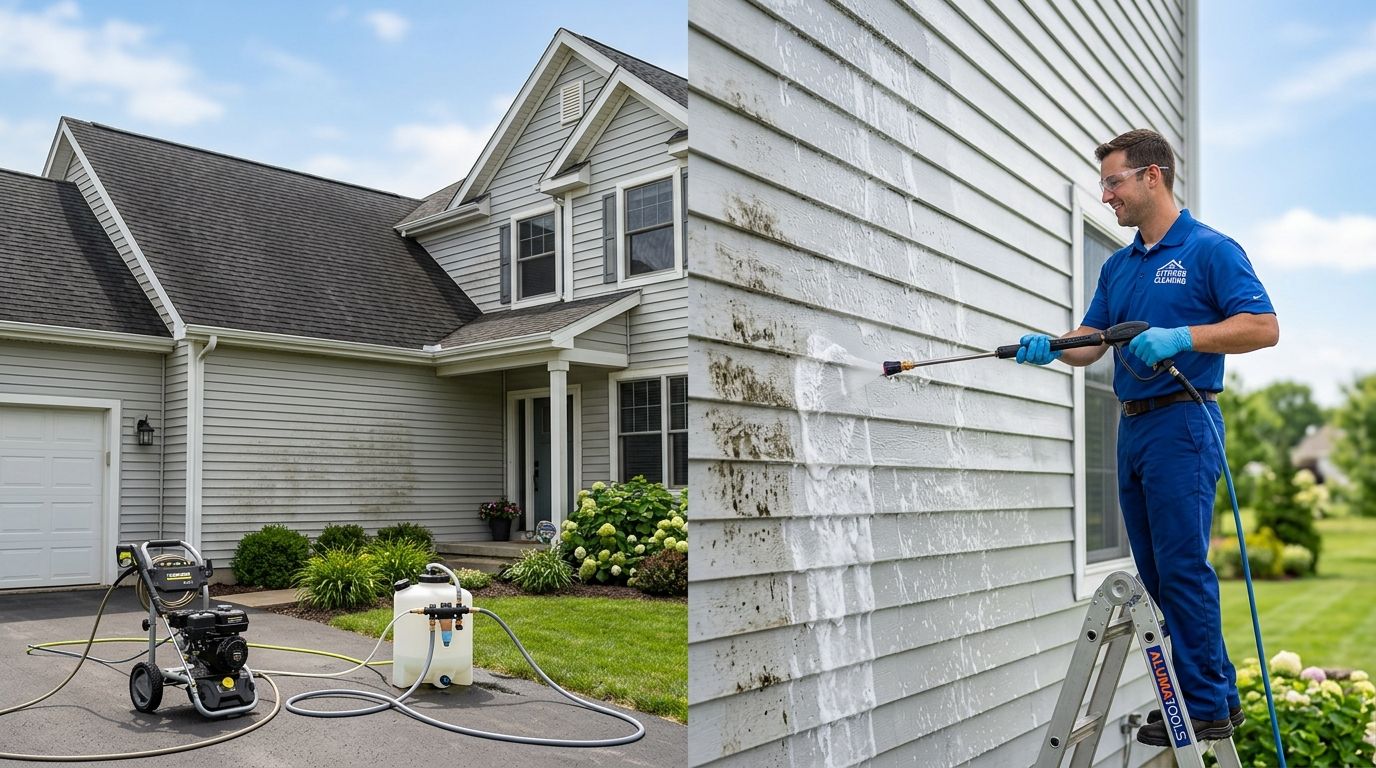
Soft washing uses low pressure, usually under 500 PSI, paired with a biodegradable chemical solution that kills mould, algae and lichen at the root rather than just blasting it off the surface. It's the method Clear Jet uses on Canberra homes with painted cladding, rendered walls and Colorbond roofing, where high pressure would crack render or strip paint film.
Soft washing pros:
- Safe on painted, rendered and coated surfaces
- Kills mould spores instead of just displacing them, so regrowth is slower
- Low risk of forcing water behind cladding or into roof fixings
- Works well on roofs where high pressure could dislodge tiles or seals
Soft washing cons:
- Won't remove tyre marks, oil stains or ground-in grime
- Chemical dwell time means the job can't be rushed
Soft washing verdict: Buy. It's the right call for any painted, rendered or roofed surface in the ACT where mechanical force is the risk, not the fix.
2. Hot Water Pressure Washing: best for driveways, pavers, and oil stains
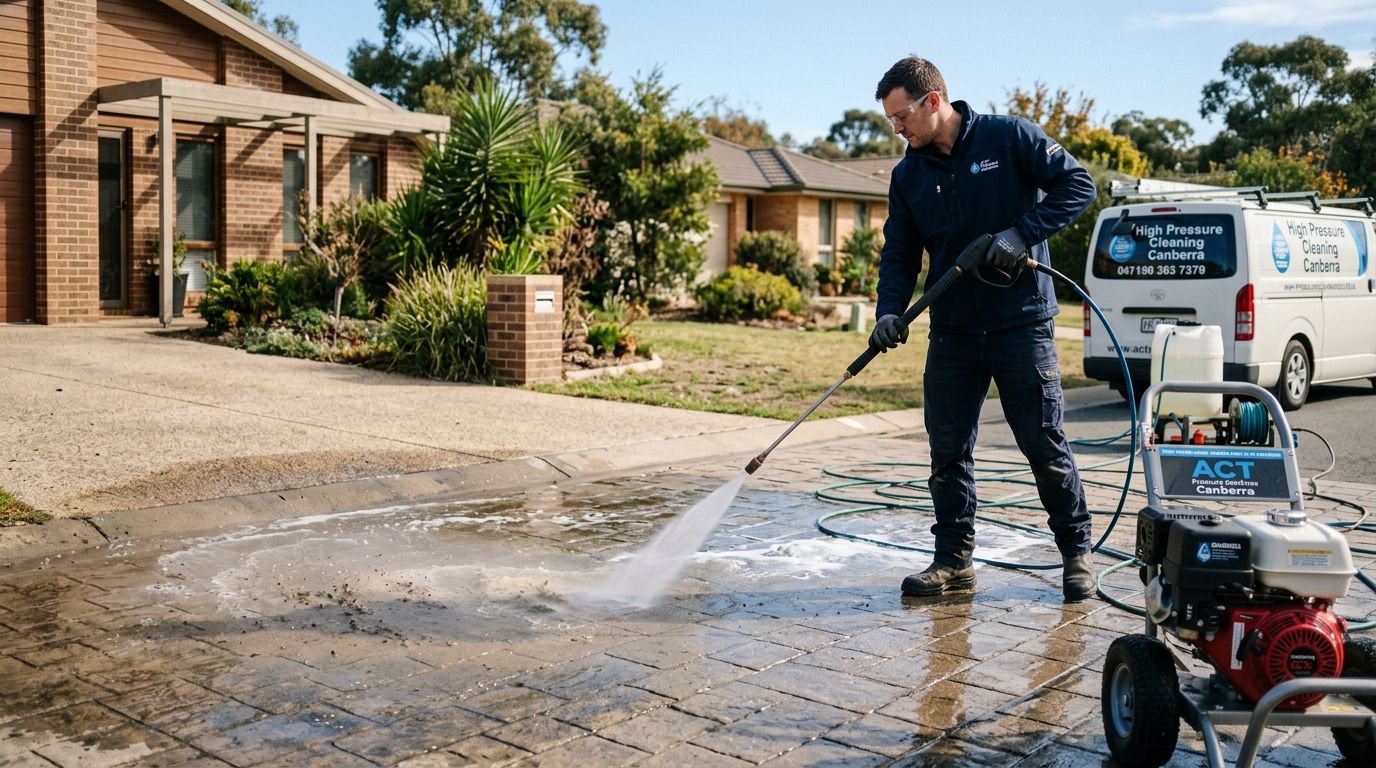
Hot water pressure washing runs at 3000-4000 PSI with heated water, which breaks down oil, grease and rubber in a way cold water and chemical soaking can't match. It's the standard method for concrete driveways, exposed aggregate and pavers that have collected years of tyre marks and engine drips.
Hot water pressure washing pros:
- Cuts through oil and grease faster than cold water
- Restores paver and concrete colour that's greyed with grime
- Fast turnaround on hard, non-coated surfaces
Hot water pressure washing cons:
- Too aggressive for painted timber, render or roof tiles
- Can strip sand from between pavers if pressure isn't managed
Hot water pressure washing verdict: Buy. For driveways and pavers with stubborn staining, this is the method that actually finishes the job.
3. Cold Water Pressure Washing: best budget option for concrete paths and fences
Cold water pressure washing is mechanical force without heat or heavy chemical use, and it's the lowest-cost option for surfaces that only carry loose dirt, dust or light moss. Bare concrete paths, unpainted timber fences and garden edging are the typical use case.
Cold water pressure washing pros:
- Cheaper to run than hot water treatments
- No chemical residue to manage around gardens
- Fast for light, non-embedded dirt
Cold water pressure washing cons:
- Struggles with oil, rust and set-in algae
- Mould and mildew often return within months without a chemical follow-up
Cold water pressure washing verdict: Hold. Fine for a light annual refresh, but not the answer for a surface with real staining.
4. Combination Soft Wash + Pressure Wash: best for full pre-sale exterior packages
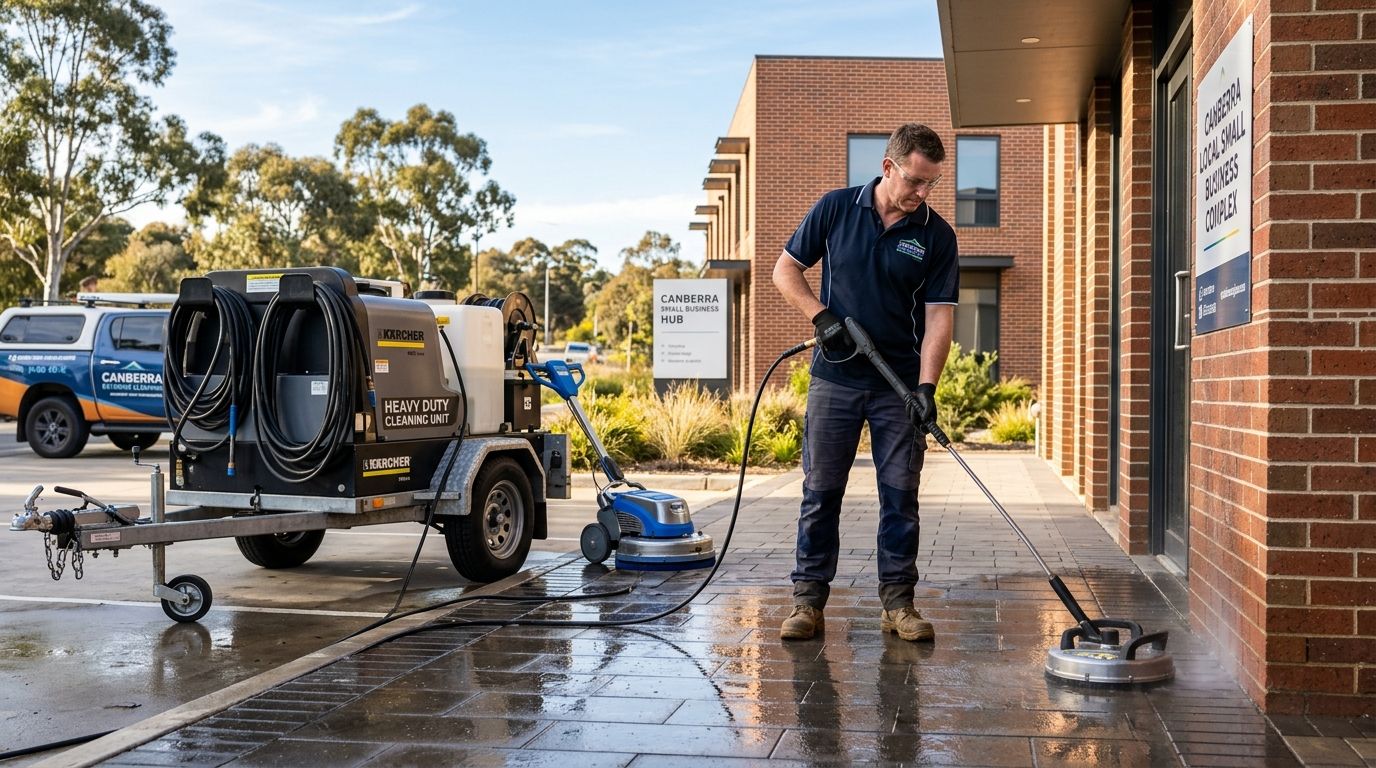
A combination clean applies soft washing to painted, rendered and roofed surfaces and pressure washing to concrete, pavers and driveways within the same visit, matching the method to each surface instead of forcing one technique across the whole property. It's the approach Clear Jet uses for pre-sale exterior cleans in Canberra, where every surface on the property needs to present well at once.
Combination clean pros:
- Every surface gets the method it actually needs
- Consistent result across render, roof, driveway and pavers in one job
- Reduces damage risk from using the wrong pressure on the wrong surface
Combination clean cons:
- Longer on-site time than a single-method clean
- Requires an operator who can judge pressure and chemical dwell time per surface
Combination clean verdict: Buy. For a full exterior refresh ahead of a sale or a seasonal reset, this is the method that covers every surface correctly.
5. DIY Pressure Washer Rental: best for small spot jobs, worst for full house exteriors
A rented consumer-grade pressure washer can handle a single small job, like a dirty bin area or a short stretch of path, but it has no pressure calibration for different surfaces and no chemical dosing system. Used across a full house exterior, it's the method most likely to cause paint stripping, render cracking or paver sand loss.
DIY rental pros:
- Lowest upfront outlay for a single isolated task
- No booking lead time
DIY rental cons:
- No pressure control tuned to painted, rendered or roofed surfaces
- No access to biodegradable chemical treatments for mould and algae
- High risk of surface damage with no professional oversight
DIY rental verdict: Skip for anything beyond a small, isolated, undamaged surface.
Not sure which method your home needs?
Get a exterior cleaning assessment for your Canberra property.
How we ranked these
Each method was scored against the six criteria above: surface compatibility, pressure control, chemical safety, stain removal power, result durability and cost relative to the job. Soft washing and hot water pressure washing both scored highest because each is matched to a specific surface type rather than applied indiscriminately. DIY rental scored lowest on pressure control and chemical safety, which is why it sits last regardless of its low upfront cost.
If you're comparing exterior house cleaning methods ranked by cost, the same logic applies: the cheapest method on paper isn't the cheapest once you factor in redoing a damaged surface.
Which method should you choose?
For most Canberra homes in 2026, the answer isn't soft wash or pressure wash, it's both, applied to the right surface. Soft wash the painted cladding, render and roof; pressure wash the driveway, pavers and paths.
If you're preparing a property for sale, a combination clean is the safer default over either method alone, and it lines up with the approach covered in pre-sale exterior cleaning for Canberra real estate. If your roof specifically is the concern rather than the whole exterior, check the breakdown in roof cleaning methods compared for Canberra homes before booking anything.
“If a painted or rendered surface blisters after cleaning, the pressure was wrong for the material, not the dirt.”
FAQ
What's the difference between soft wash vs pressure wash?
Soft washing uses low pressure, usually under 500 PSI, combined with a chemical solution to kill mould and algae at the root. Pressure washing uses high mechanical force, often 3000-4000 PSI with hot water, to physically strip dirt and stains off hard surfaces like concrete.
Is soft washing better than pressure washing for a house exterior?
Soft washing is better for painted weatherboard, render and roofing, but pressure washing is better for driveways, pavers and concrete. Neither method is universally better; the surface decides which one to use.
Can pressure washing damage a house?
Yes, high pressure can strip paint, crack render, dislodge roof tiles and force water behind cladding. This is why soft washing exists for delicate surfaces in 2026.
How often should a house exterior be cleaned in Canberra?
Most Canberra homes benefit from an annual exterior clean, with roofs and shaded render walls sometimes needing attention every 12-18 months due to mould and moss regrowth in cooler, damp conditions.
Does soft washing remove oil stains from a driveway?
No, soft washing is not built for oil or grease removal. Hot water pressure washing is the correct method for driveway oil stains and tyre marks.
Is DIY pressure washing safe for a full house exterior?
Rented consumer pressure washers lack the pressure calibration and chemical dosing needed for mixed surfaces, making them risky for a full exterior job in 2026. They're better suited to a single small, undamaged surface.
What method is used before selling a house?
A combination clean, soft washing the painted and rendered surfaces and pressure washing the driveway and pavers, is the standard approach for pre-sale exterior presentation.
One last thing
The surface, not the stain, should decide the method. A driveway covered in algae still needs pressure, not chemical soak, because algae on concrete regrows fast without mechanical removal, while the same algae on a painted fence needs the opposite approach or the paint comes off with it. Matching method to surface is the entire decision in 2026, not brand, not price, not marketing.