Concrete driveways in Canberra pick up three problems: algae and moss in shaded, frost-prone spots, oil and grease from parked cars, and the white mineral bloom known as efflorescence. No single chemical fixes all three, so picking the right one for the stain in front of you matters more than picking the strongest bottle on the shelf.
Best overall: sodium hypochlorite solution for algae, moss and general driveway grime. Best for oil and grease: alkaline degreaser. Best budget option: hot water plus a mild surfactant, no acid or bleach required.
- Sodium hypochlorite solution is the best pressure cleaning chemical for concrete driveways with algae, moss or black mould in 2026.
- Alkaline degreasers cut oil and grease stains that plain water pressure washing leaves behind.
- Oxalic acid and efflorescence removers target rust spots and the white mineral bloom that generic driveway cleaner misses.
- DIY chemical mixing on concrete carries runoff and etching risk; a professional pressure cleaning service manages dilution and rinse-off correctly.
Why this matters
Get the chemistry wrong on a concrete driveway and you either waste a wash (wrong product, stain still there) or damage the surface (wrong concentration, etched or bleached concrete). Acid-based products strip efflorescence but will burn garden beds and kill lawn edges if they run off untreated. Alkaline degreasers cut grease but need a proper rinse or they leave a slippery film behind.
Clear Jet runs driveway cleans across Canberra and the ACT and the same six product categories below cover almost every job that comes through the calendar. This guide ranks them by the stain they solve, not by strength, because strength is the wrong axis for concrete.
What makes the best pressure cleaning chemical for concrete
- Matches the stain type — biological growth, oil, rust and mineral bloom each need a different pH
- Rinses clean without residue — a chemical that leaves film just relocates the problem
- Safe runoff profile — stormwater drains in most Canberra suburbs run straight to local waterways
- Correct dwell time before rinsing — under-dwelling wastes the product, over-dwelling risks surface etching
- Dilution control — concentrate strength varies, and eyeballing ratios is the single biggest cause of driveway damage
At a glance
| Chemical type | Best for | Standout feature | Key limitation |
|---|---|---|---|
| Sodium hypochlorite solution | Algae, moss, black mould | Kills biological growth fast | Alkaline runoff must be rinsed away from garden beds |
| Alkaline degreaser | Oil and grease stains | Emulsifies petroleum residue | Leaves a slippery film if not fully rinsed |
| Efflorescence remover (acid-based) | White mineral bloom on new concrete | Dissolves salt deposits on contact | Corrosive to plants, metal and unsealed pavers |
| Oxalic acid | Rust stains from furniture or tools | Converts iron oxide to a soluble compound | Ineffective on organic stains or oil |
| Enzyme/eco surfactant cleaner | Light dirt near gardens or waterways | Biodegradable, low runoff risk | Slower on heavy or set-in stains |
| Hot water, no chemical | General surface dirt, rental bonds | Zero chemical runoff | Won't shift oil, rust or efflorescence |
1. Sodium hypochlorite solution: best for algae, moss and mould
Sodium hypochlorite is the chlorine-based solution used on most Canberra driveway cleans, particularly on shaded, south-facing concrete that never fully dries between rains. It sits at a high alkaline pH, typically in the 11-13 range, which is what makes it effective at breaking down organic growth on contact.
Sodium hypochlorite pros:
- Fast-acting on moss, algae and black mould
- Widely available in pressure-cleaning-grade concentrates
- Cheap relative to specialty acid products
Sodium hypochlorite cons:
- Alkaline runoff kills grass and garden beds if not diverted
- Corrosive to unsealed timber, steel fixtures and some paint
- Does nothing for oil, rust or mineral bloom
Best for: Canberra driveways with visible green or black growth, especially under trees or on the shaded side of the house.
Verdict: Use it — with runoff control. Skip it if the stain is oil-based; it won't touch petroleum residue.
2. Alkaline degreaser: best for oil and grease stains
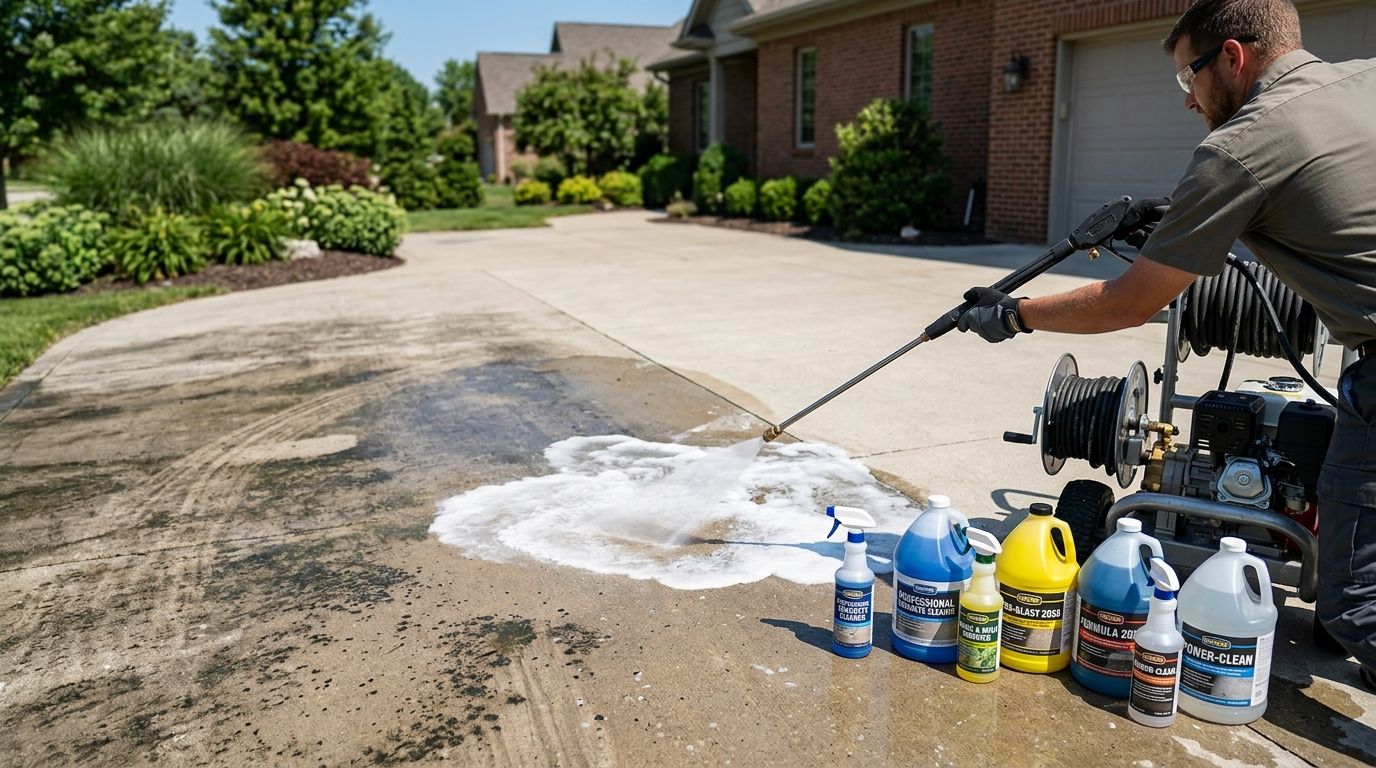
Alkaline degreasers are built around sodium or potassium hydroxide and are formulated to emulsify petroleum-based residue, the kind that soaks into concrete from a leaking gearbox or a regular parking spot. Bleach and acid products largely ignore oil; degreasers are built specifically for it.
Alkaline degreaser pros:
- Breaks down oil and grease that water alone won't shift
- Works on both fresh and set-in automotive stains
- Pairs well with hot-water pressure washing for deeper lift
Alkaline degreaser cons:
- Leaves a slippery residue if under-rinsed
- Ineffective on algae, moss or efflorescence
- Needs surface agitation on older, deeper stains
Best for: Driveways and carports with visible oil patches, particularly older concrete with years of parking history.
Verdict: Use it for oil specifically. Skip it as a general-purpose driveway cleaner — it's a one-job tool.
3. Efflorescence remover: best for white mineral bloom on new concrete
Efflorescence is the chalky white haze that appears on newer concrete and pavers as salts migrate to the surface and crystallise. Dedicated efflorescence removers are acid-based, often phosphoric acid blends, and dissolve the mineral deposit rather than scrubbing it off.
Efflorescence remover pros:
- Only reliable fix for salt bloom on new pours
- Works fast, usually within one application
- Also lifts light mineral staining on pavers
Efflorescence remover cons:
- Corrosive to garden beds, lawn and unsealed metal
- Does nothing for algae, oil or rust
- Needs neutralising rinse to avoid ongoing surface reaction
Best for: New driveways under two to three years old, or paved areas showing a persistent white haze that pressure washing alone doesn't remove.
Verdict: Use it for confirmed efflorescence only. Skip it if you're unsure of the stain type — misapplied acid on the wrong stain wastes product and risks the surface.
4. Oxalic acid: best for rust stains
Oxalic acid is the standard fix for rust marks left by outdoor furniture legs, tools or irrigation fittings. It converts the iron oxide staining the concrete into a soluble compound that rinses away, something bleach and alkaline degreasers can't do.
Oxalic acid pros:
- Purpose-built for rust, more effective than general cleaners
- Works on both fresh and old rust marks
- Doesn't require heavy scrubbing when applied correctly
Oxalic acid cons:
- No effect on algae, oil or mineral bloom
- Handling requires care around skin and eyes
- Overuse can lighten surrounding concrete colour
Best for: Isolated rust spots rather than whole-driveway cleaning jobs.
Verdict: Use it spot-only. Skip it as a full-driveway product — it's not built for that scale.
5. Enzyme or eco surfactant cleaner: best near gardens and stormwater drains
Enzyme-based and plant-derived surfactant cleaners trade cleaning speed for a lower environmental footprint. They're biodegradable and carry far less risk to garden beds, pets and the stormwater system than bleach or acid products.
Enzyme cleaner pros:
- Biodegradable, safer for gardens and waterways
- Gentle enough for daily use on sealed concrete
- No corrosive runoff risk to worry about
Enzyme cleaner cons:
- Noticeably slower on set-in oil, rust or heavy mould
- Often needs repeat applications for the same stain
- Limited availability in pressure-washing-grade concentrate
Best for: Driveways bordering vegetable gardens, ponds, or properties on stricter stormwater rules.
Verdict: Use it for light maintenance cleans. Skip it if you're dealing with heavy oil or years of built-up algae — it won't keep pace.
6. Hot water, no chemical: best for light dirt and rental bonds
High-temperature pressure washing without any chemical addition lifts dust, loose dirt and light grime through heat and pressure alone. It's the safest option where chemical use isn't an option at all, like shared driveways or rental properties with strict end-of-lease conditions.
Hot water pros:
- Zero chemical runoff or garden risk
- No dilution or handling precautions needed
- Suits light, routine maintenance cleans
Hot water cons:
- Won't remove oil, rust or efflorescence
- Slower overall than a chemical-assisted clean
- Algae and mould often return within weeks
Best for: Routine touch-up cleans, rental exits, or driveways with only surface dust and light dirt.
Verdict: Use it for light jobs. Skip it if there's visible staining of any kind — it's maintenance, not restoration.
How we ranked these
Each chemical type was scored against the five criteria above: stain match, rinse behaviour, runoff safety, dwell time tolerance and dilution sensitivity. None of the six wins on every criterion, which is the point — concrete driveway staining in Canberra is rarely just one problem. A driveway with algae under a tree and an oil patch near the garage genuinely needs two different products applied correctly, not one aggressive all-purpose spray.
If you're planning to reseal the concrete afterward, check the surface is fully neutralised and dry first — mismatched chemical residue is one of the most common reasons a fresh driveway sealer fails to bond within the first year.
Which pressure cleaning chemical should you choose?
Start by identifying the stain, not the product. Green or black patches under trees point to sodium hypochlorite. Dark patches near parked cars point to an alkaline degreaser. A chalky white haze on concrete under three years old is almost always efflorescence, and isolated orange-brown spots are rust that needs oxalic acid specifically.
Mixing the wrong chemical family together, especially bleach and acid, is a genuine safety hazard and produces no cleaning benefit. If a driveway has more than one stain type, that's a two-product job, not a stronger single product.
“The chemical that matches the stain always beats the chemical that's stronger.”
DIY concrete cleaning with the wrong dilution ratio or dwell time is the most common reason driveways come out patchy, etched, or dead in the garden bed nearby. A pressure washer handles the mechanical side, but chemical selection and runoff management is where most home attempts go wrong in 2026.
Get your driveway assessed properly
Clear Jet identifies the stain and applies the right chemical, not the strongest one.
FAQ
What is the best pressure cleaning chemical for concrete driveways?
Sodium hypochlorite solution is the best overall pressure cleaning chemical for concrete driveways with algae, moss or mould in 2026. For oil and grease, an alkaline degreaser works better; for rust, use oxalic acid instead.
Can I mix bleach and acid cleaners on the same driveway?
No. Mixing sodium hypochlorite with an acid-based efflorescence remover or oxalic acid produces toxic fumes and no cleaning benefit. Treat each stain type with its matching product on separate passes.
Will pressure cleaning chemicals damage concrete?
Acid-based products can etch or lighten concrete if left too long or applied at the wrong strength. Alkaline products are gentler on the surface but need a full rinse to avoid a slippery residue.
Is hot water pressure washing enough without chemicals?
Hot water alone lifts dust and light dirt but won't remove oil, rust or efflorescence. It suits routine maintenance cleans rather than driveways with visible staining.
How do I remove efflorescence from a new concrete driveway?
Use a dedicated acid-based efflorescence remover, then rinse thoroughly to neutralise the surface. New concrete under two to three years old is most prone to this white mineral bloom.
Is it safer to hire a professional for driveway chemical cleaning?
Professional pressure cleaning services manage dilution ratios, dwell time and runoff diversion, which are the three most common causes of DIY driveway damage. A professional clean also avoids sending corrosive runoff into garden beds or stormwater drains.
What causes black stains on a concrete driveway?
Black staining is usually mould or algae growth in shaded, damp areas of the driveway. Sodium hypochlorite solution is the standard fix, applied with an appropriate dwell time before rinsing.
Do eco-friendly driveway cleaners actually work?
Enzyme and plant-based surfactant cleaners work well on light dirt and routine maintenance but are noticeably slower on set-in oil, rust or heavy mould compared to bleach or acid products.
One last thing
The stain that trips up most DIY driveway cleans in Canberra isn't algae or oil, it's efflorescence on newer concrete, because homeowners treat it as dirt and reach for bleach, which does nothing to a mineral salt deposit. If your driveway is under three years old and still hazy after a wash, check for efflorescence before buying another bottle of the same cleaner.