Best overall for 2026: micro-mesh aluminium gutter guards. Best for heavy leaf-fall streets: reverse curve (surface tension) guards. Best for bushfire-prone properties: perforated aluminium guards. Best budget option: PVC brush guards.
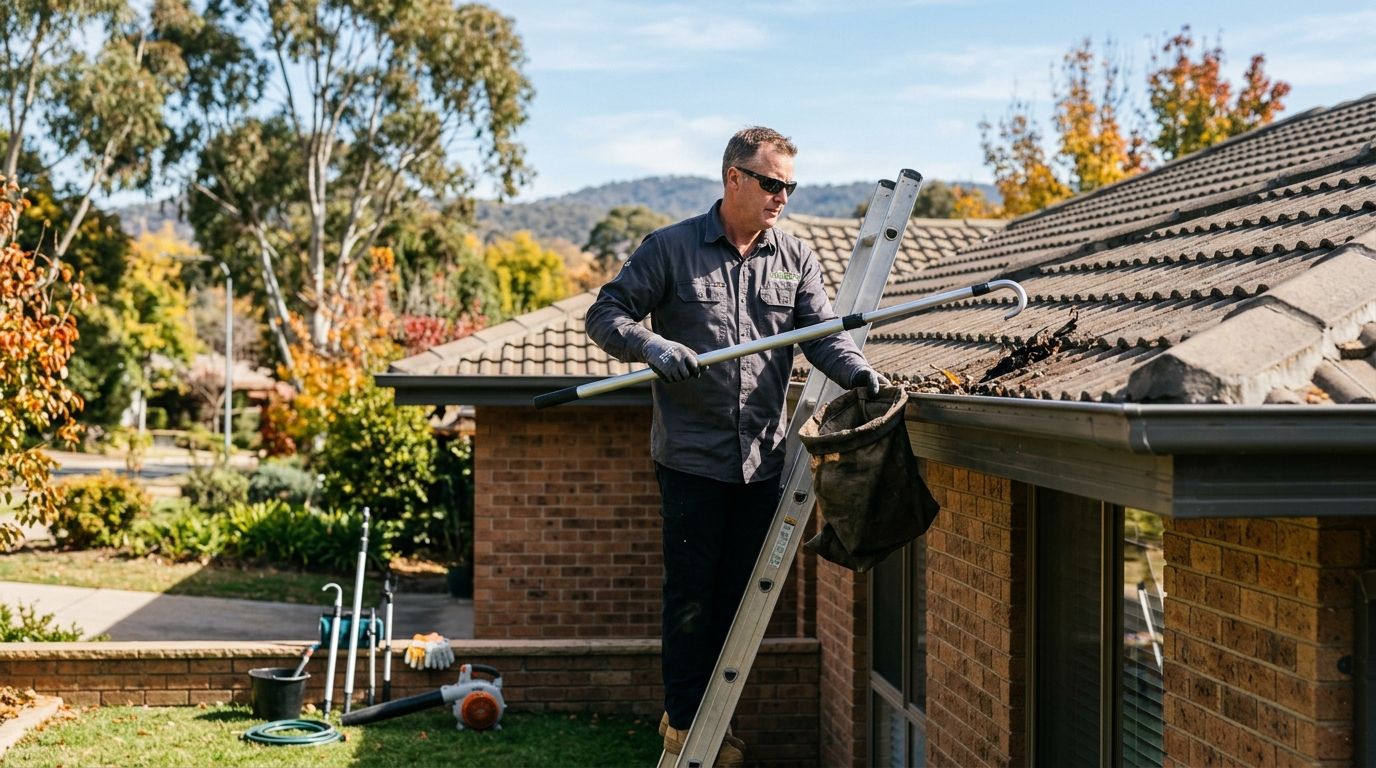
If you're climbing a ladder every few months to scoop wet leaves out of your gutters, the wrong guard (or none at all) is the reason. This guide ranks the five gutter guard types sold and installed across Canberra and the ACT in 2026, tells you which one actually cuts cleaning frequency for your specific street, and where guards stop being enough on their own.
- Micro-mesh aluminium guards are the best gutter guards Canberra homes can install in 2026 for overall debris control.
- Reverse curve guards win on tree-lined streets with heavy autumn leaf drop because there's nothing for leaves to sit on.
- Perforated aluminium guards suit higher bushfire attack level (BAL) properties under AS 3959.
- PVC brush guards are the cheapest fix but still need periodic clearing as bristles flatten.
- No guard removes the need for an annual check, and a clean roofline before install makes any guard perform better.
Why this matters
Canberra's mix of gum trees, pines and deciduous street plantings means gutters here fill fast, and frost followed by sudden downpours turns a blocked gutter into overflow damage on fascias and render fast. Gutter guards don't eliminate maintenance, they change how often you need to do it and what happens when you skip a season. Picking the wrong type for your roof, your trees or your bushfire attack level means paying for a product that clogs just as fast as bare gutters did.
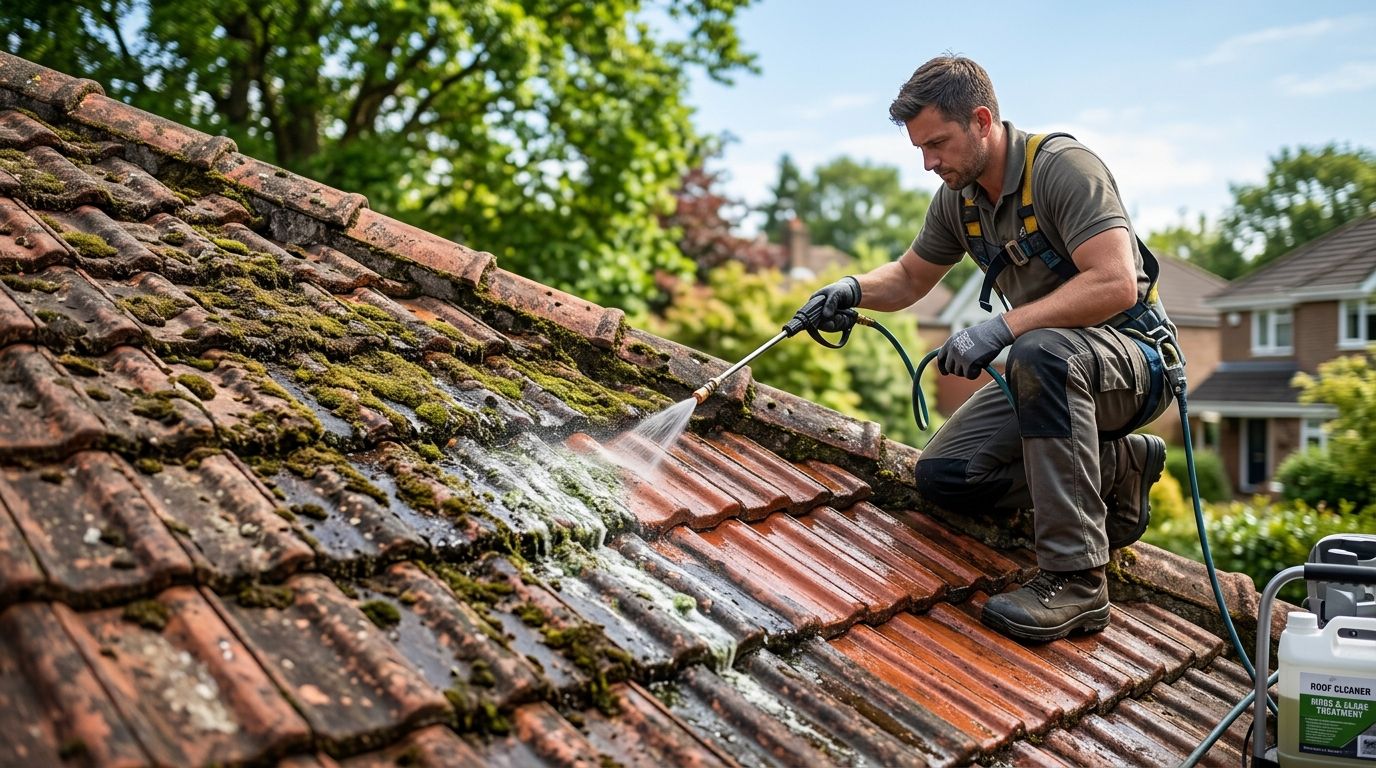
Before any guard goes on, the surface it sits over matters. A pressure cleaning specialist can strip years of moss, lichen and grime off the roofline first, so the guard clips onto a clean edge instead of trapping debris under it from day one.
What makes the best gutter guards
- Mesh or aperture size — finer apertures stop more debris but need clearing more often on the surface
- Material durability — aluminium and steel outlast PVC and foam by years, not seasons
- Bushfire compliance — non-combustible mesh matters in higher BAL zones under AS 3959
- Maintenance interval — how long you genuinely go between checks, not the marketing claim
- Install method — clip-in systems versus full roof-edge integration change labour and disruption
- Roof and gutter compatibility — quad, half-round and box gutters don't all take the same guard
Gutter guards at a glance
| Guard type | Best for | Standout feature | Key limitation |
|---|---|---|---|
| Micro-mesh aluminium | Overall debris control | Fine mesh blocks leaves, seeds and needles | Top surface still needs an occasional brush-off |
| Reverse curve (surface tension) | Heavy leaf-fall streets | No holes to clog, leaves slide off the curve | Less effective in very light rain |
| Perforated aluminium/steel | Bushfire-prone properties | Non-combustible, ember-resistant profile | Fine ash and dust can still build up over time |
| PVC brush | Narrow gutters, quick retrofit | Cheapest, no tools needed to fit | Bristles flatten and trap seeds within a couple of years |
| Foam | DIY budget jobs | Fits any gutter shape, wedge-in install | UV breaks it down fastest of any guard type |
1. Micro-mesh aluminium: best gutter guard for overall debris control
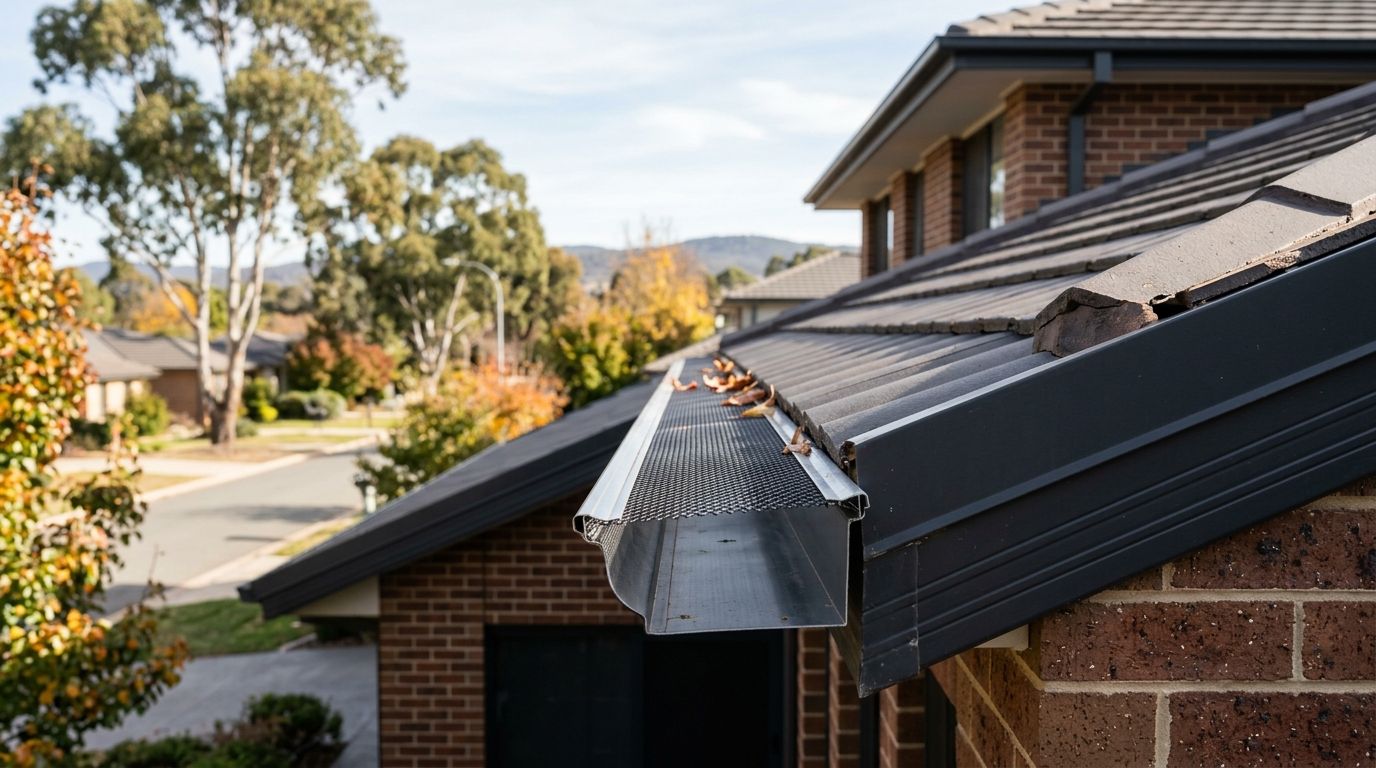
Micro-mesh guards clip over the gutter and use a fine aluminium weave that blocks leaves, gum nuts and pine needles while still letting water through. They're the closest thing to a set-and-forget option for most Canberra roofs in 2026, and aluminium doesn't rust the way older steel mesh systems did.
Micro-mesh pros:
- Blocks almost everything except fine dust and pollen
- Aluminium resists corrosion through Canberra's frost-to-heat swings
- Works across colorbond, tile and most gutter profiles
Micro-mesh cons:
- Costs more upfront than brush or foam options
- Professional install is recommended for a proper seal along the fascia
- Surface still needs an occasional wipe after big wind events
Micro-mesh pricing: varies by installer and roof length — get a site measure before comparing quotes.
Best for: homeowners near large gum or pine trees who want the longest stretch between checks. Verdict: Buy.
2. Reverse curve guards: best gutter guard for heavy leaf-fall streets
Reverse curve guards, also called surface tension guards, have no holes at all. Water follows the curve of the guard into the gutter by surface tension while leaves and debris slide straight off the front edge onto the ground.
Reverse curve pros:
- Nothing to clog because there are no perforations
- Handles heavy autumn leaf drop better than any mesh system
- Low long-term maintenance once correctly pitched
Reverse curve cons:
- Needs the right roof pitch and gutter profile to work properly
- Performs worse in very light, slow rain
- Changes the roofline's visual edge more than a clip-in mesh does
Best for: tree-lined streets in suburbs like Yarralumla or Aranda where deciduous leaf drop is heaviest through autumn. Verdict: Buy.
3. Perforated aluminium or steel: best gutter guard for bushfire-prone properties
Perforated metal guards use small, evenly spaced holes punched through a non-combustible sheet. In higher bushfire attack level (BAL) zones, this style is specified because it stops ember attack from lodging burning debris in the gutter, in line with the intent of AS 3959.
Perforated aluminium/steel pros:
- Non-combustible material suits higher BAL ratings
- More rigid than mesh, holds shape under heavy leaf load
- Long service life on both tile and metal roofs
Perforated aluminium/steel cons:
- Fine ash and dust can still build up in the perforations
- Heavier than mesh, adding to install time
- Not always necessary outside flagged bushfire zones, where mesh does the job cheaper
Best for: rural-fringe ACT properties in mapped bushfire zones. Verdict: Buy if your BAL rating requires it, otherwise Hold for standard micro-mesh.
4. PVC brush guards: best gutter guard for narrow gutters and quick retrofits
Brush guards are stiff bristle strips that sit inside the gutter channel, catching larger debris while letting water run underneath. They're the fastest guard to fit yourself and work well on narrow, older-style gutters that don't suit rigid mesh clips.
PVC brush pros:
- Cheapest guard type to buy and fit
- No specialist tools or roof access required for install
- Fits narrow or irregular gutter profiles other guards don't
PVC brush cons:
- Seeds and fine matter still lodge between bristles
- Bristles flatten over a couple of seasons, cutting effectiveness
- Still needs periodic pulling out and shaking clean
Best for: renters or short-term owners wanting a cheap, quick fix rather than a long-term system. Verdict: Hold — fine as a stopgap, not a long-term answer.
5. Foam gutter guards: best for DIY budget jobs
Foam guards are triangular wedges of open-cell foam that push into the gutter channel, letting water soak through while blocking larger leaves on top. They're the easiest guard to install without any clips or brackets.
Foam pros:
- Wedges into any gutter shape without hardware
- Lowest upfront cost of any guard on this list
- No professional install needed
Foam cons:
- UV breaks the foam down faster than any other guard type
- Can hold moisture, which encourages moss and small plant growth on top
- Needs full replacement periodically rather than just a clean
Best for: a short-term fix before a full guard system goes in, not a permanent solution. Verdict: Skip if you want a guard that lasts.
“If you're still climbing a ladder every three months, your gutter guards aren't doing their job.”
How we ranked these
Each guard type was weighed against the six criteria above: aperture size, material durability, bushfire compliance, real-world maintenance interval, install method, and roof compatibility. Micro-mesh aluminium scores highest across the most criteria for typical Canberra roofs in 2026, which is why it takes the overall spot, while reverse curve and perforated metal win narrower, specific use cases where they genuinely outperform mesh.
Which gutter guard should you choose in 2026?
For most Canberra homes, micro-mesh aluminium is the default choice — it handles the mixed leaf, needle and seed debris typical of ACT streets with the longest gap between checks. If your block sits under heavy deciduous canopy, go reverse curve instead. If your address falls in a mapped bushfire attack level zone, perforated non-combustible mesh isn't optional, it's the compliant choice. Brush and foam guards are fine as short-term or rental fixes, but budget for an upgrade once you own the place long-term.
Get the roofline clean before guards go on
Professional roof and exterior pressure cleaning across Canberra and the ACT.
FAQ
What are the best gutter guards for Canberra in 2026?
Micro-mesh aluminium guards are the best overall choice for Canberra in 2026 because they block fine debris from gum trees and pines while resisting corrosion through frost-to-heat swings. Reverse curve guards outperform mesh on streets with heavy deciduous leaf drop.
Do gutter guards stop the need for cleaning completely?
No, gutter guards reduce cleaning frequency, they don't eliminate it. Even the best-performing guards still benefit from an annual check for surface debris and dust build-up.
Are mesh gutter guards required in bushfire zones in the ACT?
Higher bushfire attack level (BAL) properties are expected to use non-combustible, small-aperture mesh under the intent of AS 3959. Perforated aluminium or steel guards are the compliant option in these zones.
Is reverse curve or micro-mesh better for gutter guards?
Reverse curve guards handle heavy leaf-fall better because there are no holes to clog, while micro-mesh handles a wider mix of debris types including seeds and needles. Choose based on which trees dominate your street.
Are foam gutter guards worth installing?
Foam gutter guards are the cheapest and easiest to fit yourself, but they degrade fastest under UV exposure and can trap moisture that encourages moss growth. Treat them as a short-term fix rather than a permanent system.
Do gutter guards work with quad and half-round gutters?
Most micro-mesh and brush systems adapt to quad and half-round profiles, but reverse curve guards need a specific roof pitch and gutter shape to perform properly. Check compatibility with your gutter profile before buying.
Should I clean my gutters before installing guards?
Yes, guards clip or wedge onto the existing gutter edge, so any built-up grime, moss or debris gets trapped underneath if it isn't cleared first. A clean roofline also helps the guard seal properly along the fascia.
One last thing
The guard that gets skipped in most comparisons is the roof surface underneath it. Moss and lichen buildup on tile and metal roofing sheds fine grit into the gutter constantly, and no guard type on this list is designed to filter that out — it just slows the leaves down. A clean roof before install, and a periodic check after, is what actually stretches the years between full gutter clears.