Moss and algae turn a clean tile roof black-green fast once Canberra's cooler, damp months set in, and picking the wrong treatment means watching it crawl back within a season. This guide ranks the five best moss and algae removal treatments for tile roofs in 2026, covering what actually kills growth at the root versus what just knocks off the surface layer.
Best overall: professional soft wash treatment. Best for long-term prevention: zinc and copper roof strips. Best budget option: DIY moss and algae spray.
- Professional soft wash treatment is the best moss and algae removal for tile roofs in 2026 for most ACT homes.
- Zinc and copper strips add prevention that lasts years, not months, once a roof is already clean.
- DIY sprays suit small patches and renters but usually need reapplying every 3 to 6 months.
- Skip high-pressure blasting on tile roofs entirely — it belongs on driveways and pavers, not fragile terracotta or concrete tiles.
Why this matters
A tile roof with moss and algae isn't just a cosmetic problem. Growth holds moisture against the tile surface, and in Canberra's frost cycle that moisture expands and contracts, which speeds up cracking and lifting on older concrete and terracotta tiles alike. Clear Jet sees the same pattern on ACT roofs every winter: south-facing and shaded slopes go green first because they dry slower after rain or frost.
There's also a resale angle. A roof covered in black streaking reads as neglect to a buyer or valuer, even when the tiles underneath are structurally fine. Treating it properly, rather than just blasting it off, is what keeps the result looking clean past the next wet season.
What makes the best moss and algae treatment
- Safe for the tile substrate — no cracking, no lifted glaze, no dislodged ridge caps
- Kills growth at the root, not just the visible surface layer, so spores don't regenerate in weeks
- Length of the regrowth-free period after treatment
- Low impact on gutters, gardens and rainwater tanks downstream of the roof
- Realistic access and labour requirements — a tile roof isn't a driveway
- Fits a pre-sale or maintenance timeline without dragging on for weeks
At a glance
| Treatment | Best for | Standout feature | Key limitation |
|---|---|---|---|
| Professional soft wash | Standard tile roof moss & algae removal | Kills spores without high pressure | Needs professional equipment and access |
| DIY moss & algae spray | Small patches, renters, budget jobs | Cheap, ground-reachable application | Weak on established growth, needs repeat use |
| Zinc and copper strips | Long-term prevention after cleaning | Metal ions wash down with every rainfall | Doesn't remove existing growth on its own |
| High-pressure water blasting | Driveways and pavers, not roofs | Fast visible result on hard, flat surfaces | Can crack or dislodge roof tiles |
| Full clean + reseal restoration | Pre-sale prep and street appeal | Combines cleaning with a protective seal | Bigger job, longer timeline than one treatment |
1. Professional soft wash treatment: best moss and algae removal for standard tile roofs
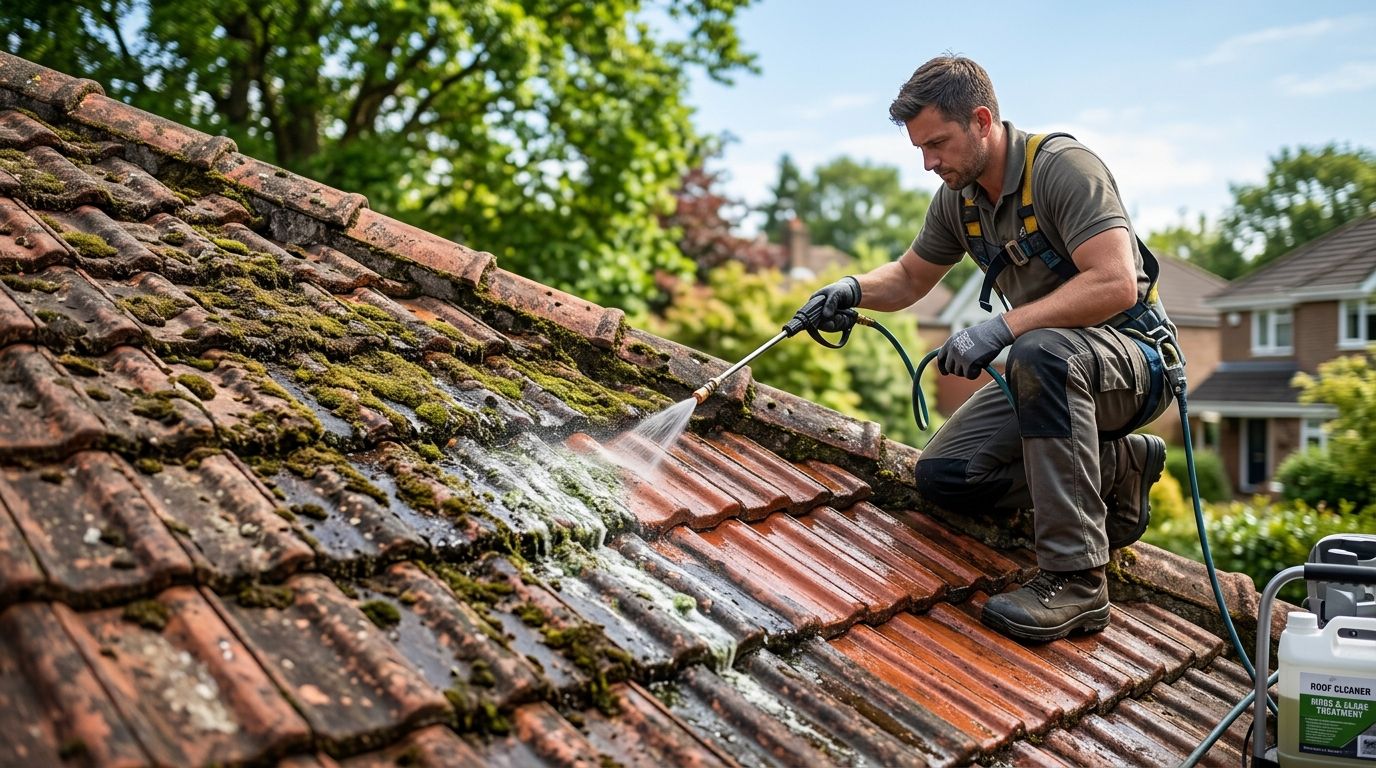
Soft washing applies a low-pressure chemical solution that breaks down moss, algae and lichen at the root, then rinses it away without blasting the tile surface. It's the method Clear Jet uses on ACT tile roofs because it treats the growth rather than just stripping the visible layer off the top.
Professional soft wash pros:
- Doesn't stress or crack terracotta and concrete tiles the way high pressure does
- Kills spores below the surface, so regrowth is slower than after a plain rinse
- Typically keeps a roof clear of moss and algae for 12 to 18 months in Canberra's climate
- Handles steep or ridge-line growth that's hard to reach with a garden sprayer
Professional soft wash cons:
- Costs more up front than a DIY spray
- Requires scheduling around weather and roof access
Best for: any tile roof with visible moss, algae or black streaking that needs a genuine reset rather than a surface wipe. For a side-by-side on how this compares with other cleaning approaches for Canberra roofs, see the roof cleaning methods comparison.
Verdict: recommended as the default choice for 2026.
2. DIY moss and algae spray: best budget option for small patches
Hardware-store moss and algae sprays work on the same principle as a professional soft wash, just at a smaller scale and lower concentration. They're the right call for a renter dealing with a small patch, or a homeowner catching growth early before it spreads.
DIY spray pros:
- Low cost and no booking required
- Fine for isolated patches on lower, accessible roof sections
- Easy to apply with a garden sprayer on a still day
DIY spray cons:
- Often needs reapplication every 3 to 6 months to hold the line
- Struggles against established, thick moss mats on ridge lines
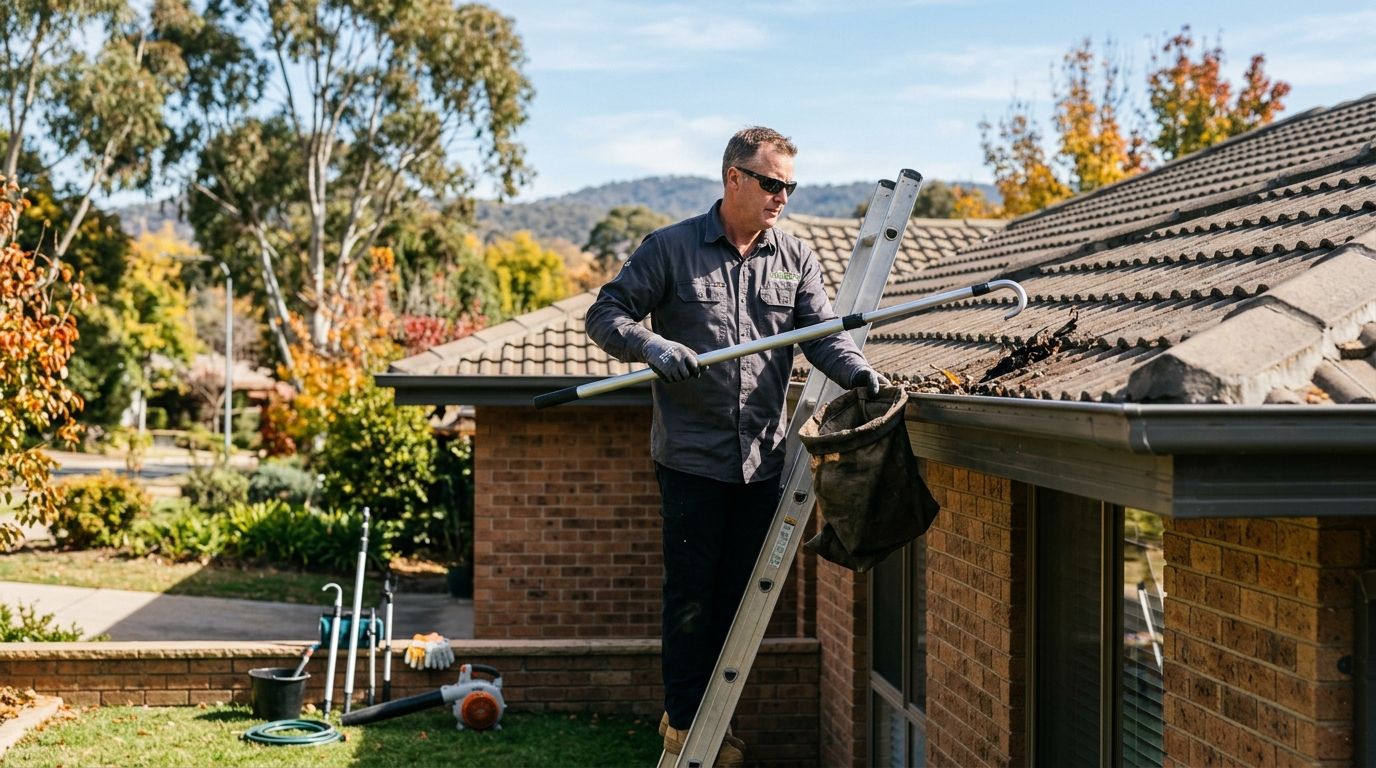
- Applying it on a pitched roof yourself carries real fall risk
Best for: small, early-stage patches on roofs a homeowner can safely reach from a ladder, not full-roof coverage.
Verdict: hold — useful as a stopgap, not a full-roof solution.
3. Zinc and copper strips: best for long-term prevention
Strips of zinc or copper fixed near the ridge line release metal ions every time it rains, and those ions wash down the roof slope and suppress new moss and algae growth. This isn't a cleaning method — it's prevention that gets installed after a roof is already clean.
Zinc and copper strip pros:
- Passive protection that keeps working every rainfall, with no reapplication
- Commonly cited to hold back regrowth for several years once installed
- Low visual impact when fitted along the ridge cap
Zinc and copper strip cons:
- Does nothing for moss or algae that's already established
- Needs a proper clean first, or it's just prevention on top of an existing problem
- Installation still means roof access
Best for: homeowners who've just had a roof treated and want to stretch the regrowth-free period well past the usual 12 to 18 months.
Verdict: recommended as an add-on after cleaning, not a standalone fix.
4. High-pressure water blasting: best for driveways and pavers, not tile roofs
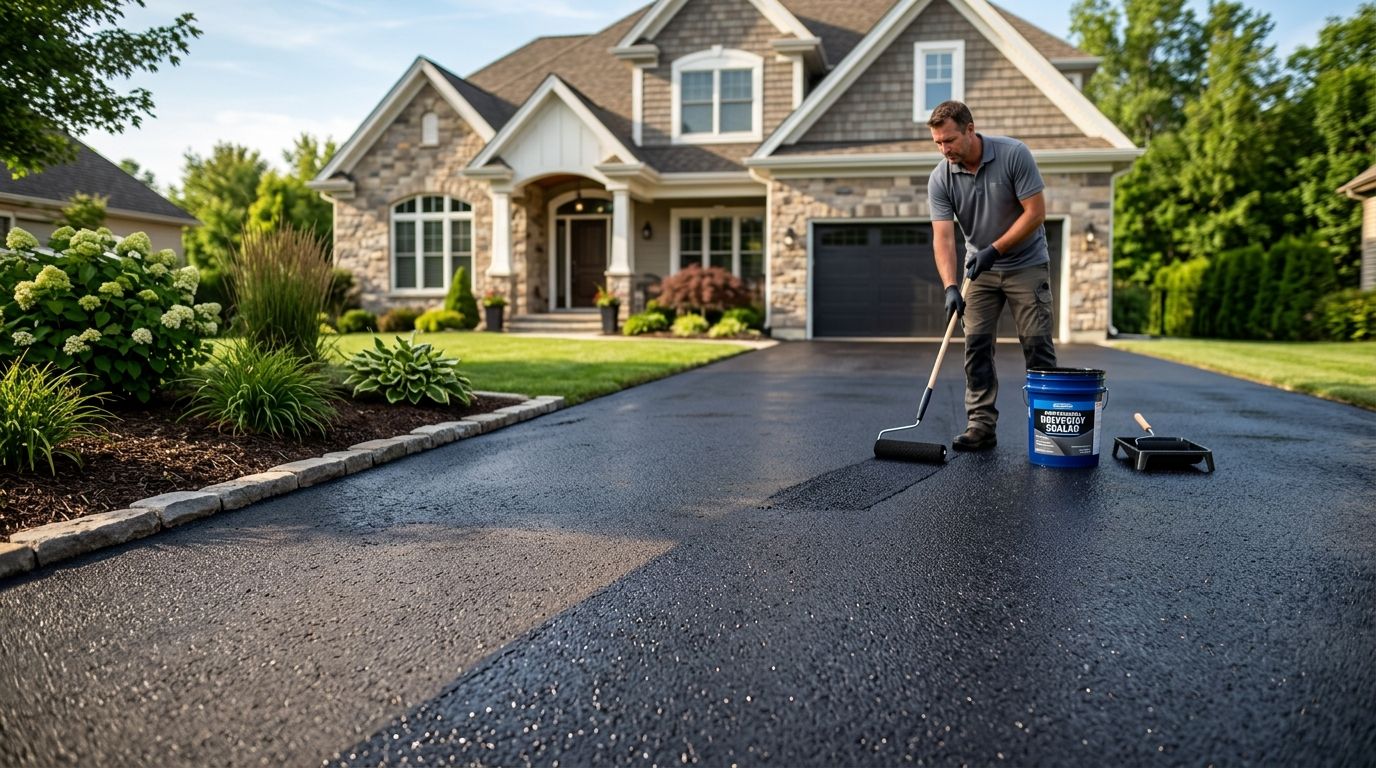
This one earns a spot on the list because it's the most common mistake homeowners make: renting or buying a high-pressure washer built for driveways and pavers and pointing it at the roof. It strips moss off fast, which is exactly the problem — that same force lifts glazing, cracks tiles, and can dislodge ridge caps.
For a sense of what these machines are actually built for, the pressure washer comparison for Canberra driveways covers the right use case for this equipment.
High-pressure blasting pros:
- Fast, visible result on flat, hard surfaces like concrete driveways
- Widely available for hire or purchase
High-pressure blasting cons:
- Can crack or lift tiles that soft washing leaves untouched
- Forces water under tiles and into the roof cavity if used carelessly
- Doesn't kill spores at the root, so surface growth can return faster than after a soft wash
Best for: driveways, pavers and concrete paths — not tile roofs, full stop.
Verdict: skip for any tile roof job in 2026.
5. Full roof clean and reseal restoration: best for pre-sale prep
This combines a soft wash treatment with a protective sealant or repoint over the roof, aimed at homeowners preparing to list a property or wanting one comprehensive job rather than staged treatments over a few years.
Full restoration pros:
- Addresses moss, algae and roof appearance in a single project
- Adds a protective layer that extends the clean look past a standalone soft wash
- Strong option ahead of a valuation or open home
Full restoration cons:
- Longer timeline than a single soft wash visit
- Not necessary for a roof that just needs routine upkeep
Best for: anyone prepping a Canberra property for sale or wanting a full reset rather than ongoing maintenance treatments.
Verdict: recommended for pre-sale, optional for routine maintenance.
How we ranked these
Each treatment was measured against the criteria above: whether it's safe for tile, whether it kills growth at the root, how long the result holds, its impact on gutters and gardens, and how it fits a realistic timeline. Professional soft washing topped the list because it's the only method on this page that ticks every criterion without a caveat attached. High-pressure blasting sits at the bottom for the opposite reason — it fails the tile-safety test outright.
Get your tile roof assessed
Find out which treatment your roof actually needs before booking a job.
Which treatment should you choose?
For most Canberra tile roofs with visible moss, algae or black streaking, professional soft wash treatment is the best moss and algae removal for tile roofs in 2026 — it's the only option that clears existing growth safely and holds for 12 to 18 months. Pair it with zinc or copper strips afterwards if you want to stretch that window further. Reach for a DIY spray only on small, easily accessible patches, and never point a pressure washer built for driveways at a tile roof.
FAQ
What's the best moss and algae removal treatment for tile roofs in 2026?
Professional soft wash treatment is the best option for most tile roofs in 2026 because it kills growth at the root without the tile damage risk that comes with high pressure. Pairing it with zinc or copper strips extends how long the roof stays clear.
Is pressure washing safe for a tile roof?
No, standard high-pressure washing built for driveways and pavers can crack, lift or dislodge roof tiles. Soft washing at low pressure is the safer method for terracotta and concrete tile roofs.
How long do zinc and copper strips prevent moss regrowth?
Zinc and copper strips are commonly cited to suppress regrowth for several years once installed, since rain continually washes metal ions down the roof slope. They only prevent new growth and don't remove moss that's already established.
Can homeowners remove tile roof moss themselves?
Small, easily reachable patches can be treated with a DIY moss and algae spray, but full-roof coverage and ridge-line growth are safer left to a professional soft wash. Roof access on a pitched tile roof carries real fall risk.
Does moss on a tile roof cause leaks or damage?
Moss holds moisture against the tile surface, and in a frost cycle like Canberra's, that moisture speeds up cracking and lifting over time. Left untreated for long enough, it can contribute to leaks at joints and ridge caps.
How long does a professional soft wash treatment last?
A soft wash treatment typically keeps a tile roof clear of moss and algae for 12 to 18 months in Canberra's climate. Adding zinc or copper strips afterwards extends that window further.
Is DIY moss killer spray safe for gutters and rainwater tanks?
Check the product label before use, since formulations vary and some are not rated for roofs feeding a rainwater tank. This is one reason professional soft wash treatments, which use roof-appropriate solutions, are the safer default for full-roof jobs.
One last thing
The south-facing and shaded slope of a tile roof almost always shows regrowth first, simply because it dries slower after rain or frost than the sun-facing side. If you're only budgeting for a partial treatment, that's the section to prioritise — it's where the next round of moss and algae will start.