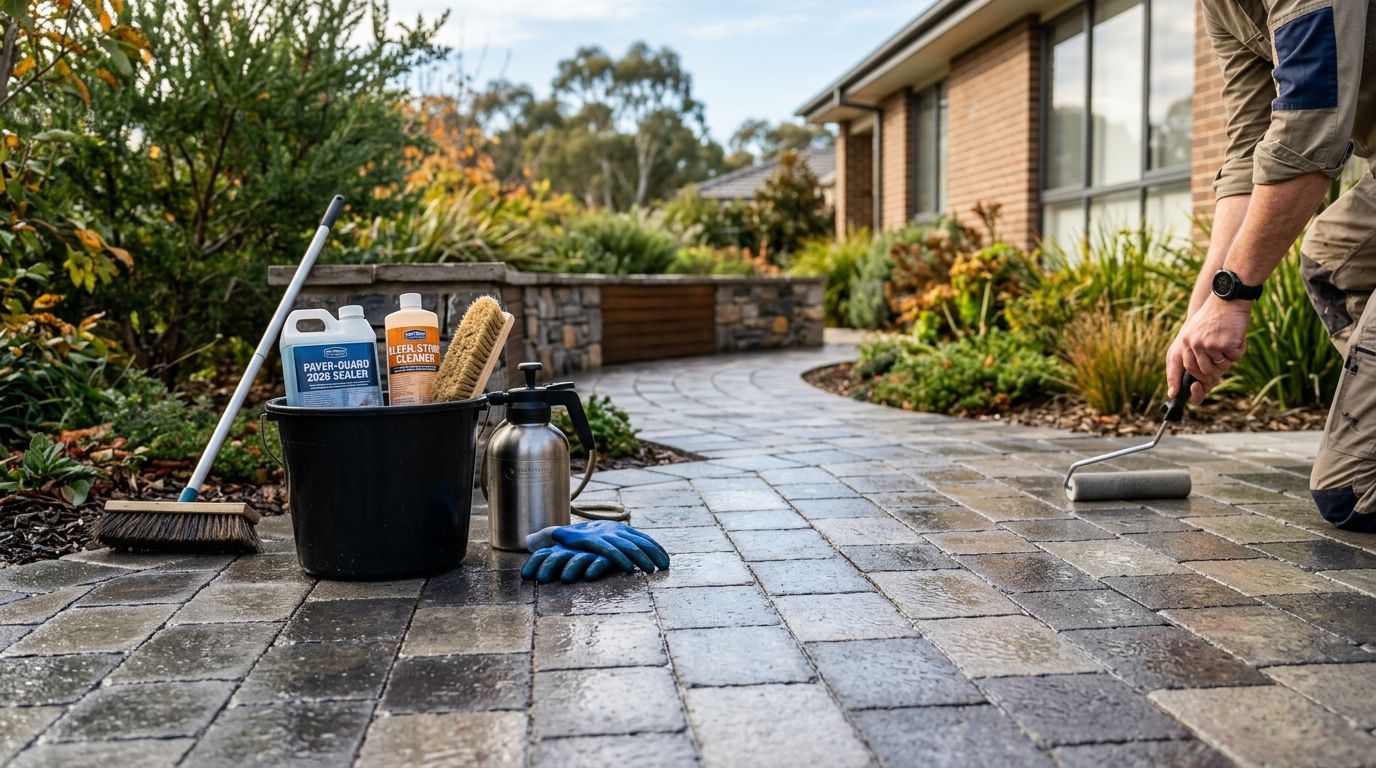
Choosing the best paver cleaning and sealing products for Canberra 2026 comes down to matching sealer chemistry to your paver material and how much frost, UV and foot traffic it takes each year. Penetrating sealers win for natural stone and sandstone pavers, while film-forming acrylics suit high-traffic concrete driveways better.
- Penetrating (impregnating) sealer is the best overall pick for Canberra sandstone and natural stone pavers exposed to frost.
- Solvent-based film-forming sealer holds up best on high-traffic concrete paver driveways.
- Water-based acrylic sealer is the lowest-VOC option for family entertaining areas.
- Non-slip additive sealer is mandatory for pool surrounds and shaded pathways, not optional.
- Pressure clean pavers before sealing every time — sealer applied over grime traps dirt permanently.
Why this matters
Canberra pavers deal with two extremes most Australian cities don't combine: sub-zero winter mornings that push moisture into pores, and UV exposure through dry summers that bakes surface coatings. Get the sealer wrong and you'll see whitening, peeling or a slippery film within a single season.
The products below aren't ranked by brand name — they're ranked by chemistry, because that's what actually determines performance on ACT pavers. The verdict: penetrating sealer is the safest default for most Canberra homes, with three other categories covering the jobs it doesn't do well.
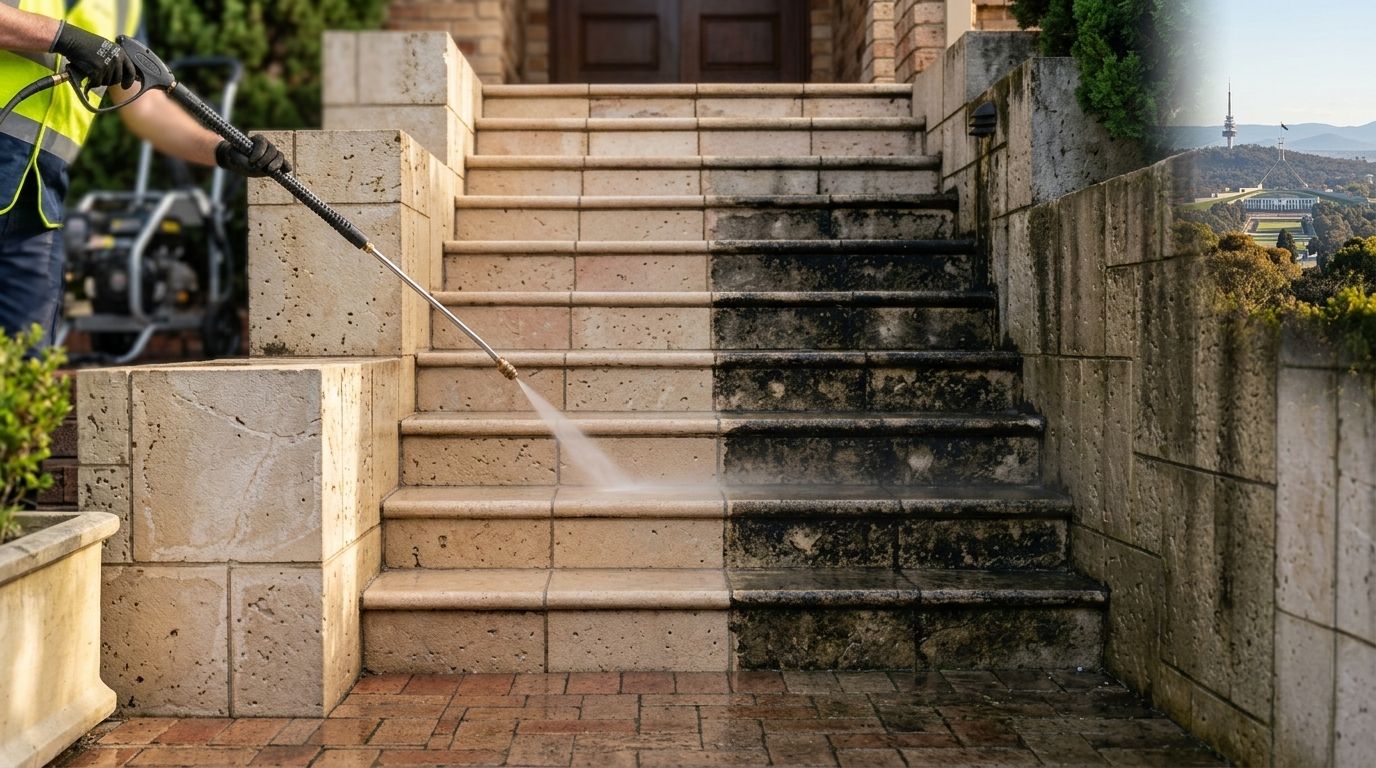
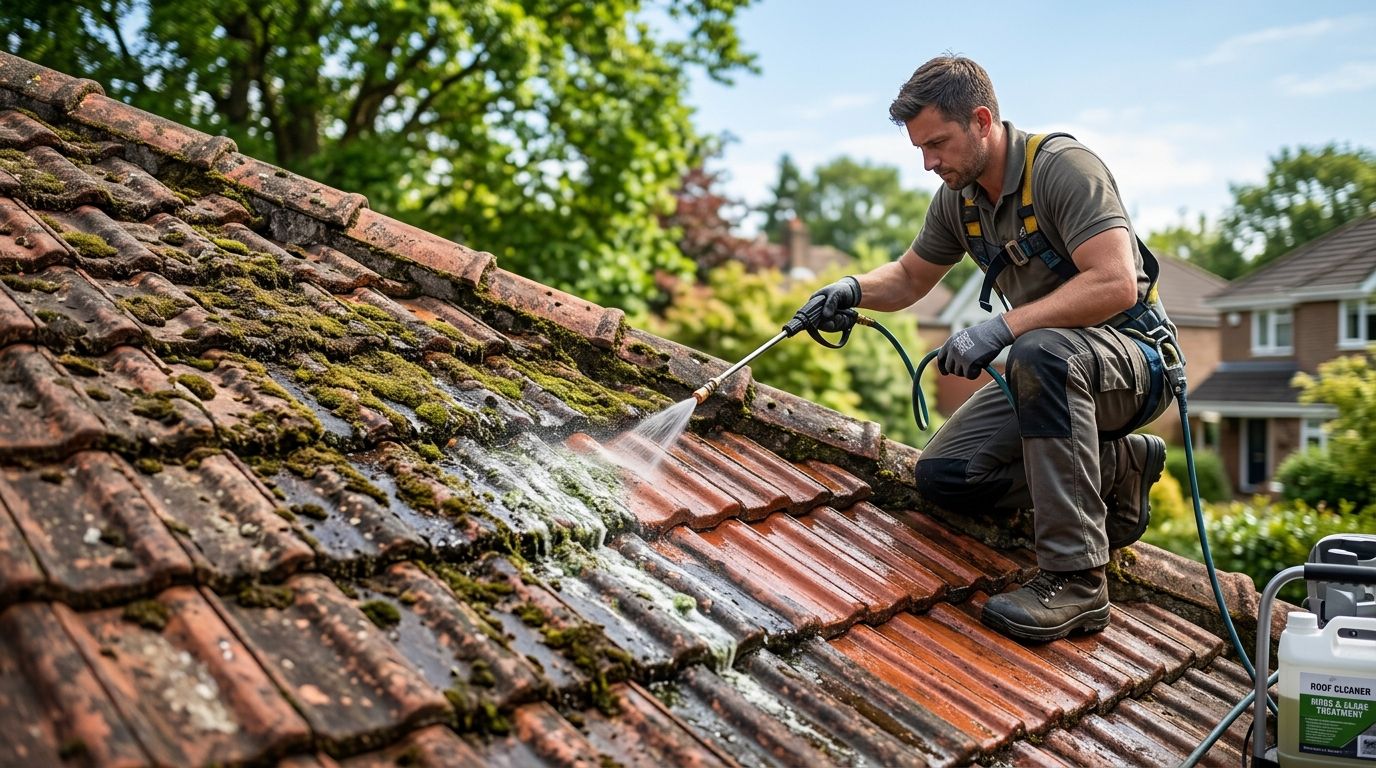
Getting this right starts before the sealer ever touches the pavers. A paver surface still holding moss, lichen or embedded grime will seal in that grime permanently — ClearJet treats pressure cleaning as the non-negotiable first step on every paver job across Canberra and the ACT.
What makes the best paver sealer
- Breathability — lets trapped moisture escape instead of blistering under UV
- Frost tolerance — resists cracking through Canberra's sub-zero winter cycles
- Slip resistance — critical near pools, entries and shaded pathways
- UV stability — resists yellowing or chalking after a full Canberra summer
- Reapplication ease — can be recoated without full stripping every cycle
- VOC level — matters for homes with kids, pets or enclosed courtyards
At a glance: paver sealer types compared
| Sealer type | Best for | Standout feature | Key limitation |
|---|---|---|---|
| Penetrating (impregnating) | Sandstone and natural stone pavers | Breathes, invisible finish | Doesn't enhance colour |
| Solvent-based film-forming | High-traffic driveway pavers | Strong wet-look durability | Higher VOC, needs ventilation |
| Water-based acrylic | Family entertaining areas | Low odour, low VOC | Shorter lifespan in full sun |
| Enhancing/colour-boost | Faded concrete pavers | Restores rich colour | Can look artificial if overused |
| Non-slip additive | Pool surrounds and pathways | Reduces slip risk | Adds slight surface texture |
1. Penetrating sealer: best paver sealer for sandstone and natural stone
Penetrating sealer soaks into the paver rather than sitting on top, so it doesn't peel and it lets moisture vapour escape. This matters on Canberra sandstone and travertine, where trapped moisture behind a film sealer causes bubbling once frost sets in.
Penetrating sealer pros:
- Invisible, natural-look finish that doesn't change paver colour
- Won't peel, flake or go cloudy under UV
- Handles Canberra's frost-thaw cycles without cracking
Penetrating sealer cons:
- Doesn't deepen or enhance faded colour
- Slightly shorter visible "wet look" than film sealers
Best for: sandstone, travertine, limestone and other natural stone pavers. Verdict: Buy for any natural stone surface in Canberra.
2. Solvent-based film-forming sealer: best paver sealer for driveways
Solvent-based sealers form a hard, glossy film on the surface, which is exactly what a concrete paver driveway needs to resist tyre scuffing and oil staining. The trade-off is a stronger odour during application and a need for good ventilation while curing.
Solvent-based sealer pros:
- Strongest abrasion resistance of the group, suited to vehicle traffic
- Deep "wet look" gloss that lasts through Canberra summers
- Resists oil and fuel staining better than water-based options
Solvent-based sealer cons:
- Higher VOC content, needs open-air application
- Can trap moisture on less porous concrete if over-applied
Best for: concrete paver driveways and vehicle areas. Verdict: Buy for driveways, Skip for natural stone.
3. Water-based acrylic sealer: best paver sealer for entertaining areas
Water-based acrylic sealer trades some durability for a low-odour, low-VOC formula that's easier to apply around kids, pets and enclosed courtyards. It's the right call for alfresco areas used daily rather than driven on.
Water-based sealer pros:
- Low odour, safer for enclosed courtyards and pool decks
- Easier clean-up and reapplication
- Dries faster than solvent-based options in most conditions
Water-based sealer cons:
- Shorter effective life in direct summer sun, often under the 2-3 year average
- Less scuff resistance than solvent-based film sealers
Best for: patios, alfresco entertaining zones and family courtyards. Verdict: Buy for low-traffic living areas.
4. Enhancing sealer: best paver sealer for faded concrete
Enhancing sealers are a subtype of film-forming sealer built to restore colour saturation on concrete pavers that have bleached out after a few Canberra summers. It's a cosmetic fix layered onto a protective base.
Enhancing sealer pros:
- Restores rich colour on faded or chalky concrete pavers
- Doubles as UV protection while enhancing appearance
- Good option before selling a property
Enhancing sealer cons:
- Overuse creates an artificial, overly glossy look
- Not suited to natural stone where colour authenticity matters
Best for: ageing concrete pavers that have lost their original colour. Verdict: Hold — only worth it once the surface is genuinely faded, not as a routine reseal.
5. Non-slip additive sealer: best paver sealer for pool areas
Any sealer used near a pool or shaded walkway in Canberra needs a non-slip additive mixed in, because a glossy film sealer on wet pavers is a genuine safety hazard. This isn't a separate product family so much as a mandatory add-on to whichever base sealer you choose.
Non-slip additive pros:
- Meaningfully reduces slip risk on wet or shaded pavers
- Compatible with both solvent and water-based bases
- Doesn't noticeably change the visual finish
Non-slip additive cons:
- Adds slight texture that some homeowners notice underfoot
- Not needed on covered, always-dry surfaces
Best for: pool surrounds, south-facing pathways and shaded entries. Verdict: Buy for any pool or shaded path — non-negotiable.
How we ranked these
Each category was scored against the six criteria above — breathability, frost tolerance, slip resistance, UV stability, reapplication ease and VOC level — then matched to the paver material and traffic pattern it performs best on. No category wins outright; each earns its place solving one specific Canberra condition.
Which paver sealer should you choose?
If you're sealing sandstone, travertine or any natural stone, penetrating sealer is the default choice for 2026. If it's a concrete driveway carrying daily vehicle traffic, solvent-based film sealer earns its higher VOC trade-off. For everyday entertaining areas, water-based acrylic keeps things low-odour, and non-slip additive is mandatory the moment a pool or shaded path is involved.
Whichever sealer type fits your surface, the result only lasts if the pavers are properly stripped of moss, lichen and grime first — check ClearJet's guide to driveway sealers to use after pressure cleaning before booking a sealing job.
Get your pavers cleaned before sealing
Professional pressure cleaning across Canberra and the ACT before any sealer goes down.
FAQ
What's the best paver sealer for Canberra conditions?
Penetrating (impregnating) sealer is the best default for Canberra in 2026 because it breathes and resists the frost-thaw cycles common through ACT winters. Concrete driveways carrying vehicle traffic do better with a solvent-based film sealer instead.
Is water-based sealer better than solvent-based sealer?
Water-based sealer is better for low-odour entertaining areas and homes with kids or pets, while solvent-based sealer holds up better under vehicle traffic and direct sun. Neither is universally better — the choice depends on the paver's use.
How often do paver sealers need reapplying?
Most paver sealers need reapplying every 2-3 years, though sun-exposed water-based coatings can wear sooner. Frost cycles and UV exposure in Canberra tend to shorten this interval compared to milder climates.
Do you need to pressure clean pavers before sealing?
Yes — sealing over moss, lichen or embedded dirt traps that grime permanently under the coating. Pressure cleaning pavers before sealing is the step that determines how the finished job actually looks.
What sealer works best around a pool?
Any sealer used around a pool needs a non-slip additive mixed into the base coat, regardless of whether it's water-based or solvent-based. Skipping this on wet, glossy pavers creates a genuine slip hazard.
Can enhancing sealer be used on natural stone pavers?
Enhancing sealer is built for faded concrete pavers and isn't the right choice for natural stone, where a penetrating sealer preserves the material's authentic colour. Using an enhancer on sandstone often looks artificial.
How long does paver sealer take to cure?
Most paver sealers need 24-48 hours before foot traffic and longer before vehicles are allowed back on a driveway. Cold Canberra mornings can extend cure time slightly compared to warmer conditions.
Does sealing pavers stop weed growth between joints?
A properly applied sealer reduces weed and moss growth in paver joints by limiting moisture retention, but it doesn't eliminate it entirely. Regular pressure cleaning still matters for keeping joints clear long-term.
One last thing
The single biggest mistake homeowners make in 2026 isn't picking the wrong sealer category — it's sealing over a paver surface that wasn't properly stripped of biological growth first. Moss and lichen left under a film sealer keep growing beneath the coating, and by the time it shows through, the only fix is stripping the whole surface back. Book the pressure clean, let it dry fully, then seal.