Graffiti removal in Canberra comes down to one decision: which product or method lifts spray paint, marker and ink off your surface without damaging it underneath. This guide ranks six approaches that actually work in 2026, from DIY sprays and gels to professional pressure cleaning, so you pick the right one on the first try instead of scrubbing a stain deeper into the render.
Best overall: professional pressure cleaning through a service like Clear Jet's graffiti removal handles the widest range of Canberra surfaces without stripping paint, etching sandstone or breaching stormwater rules. Best for DIY metal and glass: solvent-based gel remover. Best for eco-sensitive sites near waterways: citrus-based biodegradable remover. Best for large commercial walls: hot water pressure washing systems. Best budget option: all-purpose degreaser with a stiff brush. Best for repeat-offender sites: anti-graffiti protective coating.
- Professional pressure cleaning wins for brick, render and sandstone in Canberra because it won't etch porous surfaces.
- Solvent-based gel removers are the fastest fix for spray paint on metal and glass but need ventilation.
- Citrus-based biodegradable removers suit properties near waterways, though they need 2-3 applications on cured paint.
- Anti-graffiti coating doesn't remove existing tags, but it stops repeat offenders costing you every month.
- Best graffiti removal products for 2026 depend on surface type first, budget second.
Why this matters
Graffiti removal isn't a one-product job. A gel that lifts paint clean off a Colorbond fence can eat into sandstone or leave a pale patch on painted render that never quite matches the rest of the wall. Chemical run-off into stormwater drains is also regulated in the ACT, which rules out tipping some solvent-based removers straight down the gutter after use.
The surface you're treating, the age of the paint and how often the spot gets re-tagged all change which product or method actually makes sense in 2026. Get any of those wrong and you either waste a product or pay to fix the damage the "fix" caused.
What makes the best graffiti removal product
- Surface compatibility — porous render, sandstone, Colorbond and glass all react differently to the same solvent
- Paint chemistry match — spray enamel, acrylic tags and permanent marker need different chemistry to break down
- Stormwater compliance — run-off disposal is regulated in the ACT, especially on driveways and footpaths
- Damage risk — etching, fading or discolouration from pressure or chemicals that's too aggressive for the surface
- Turnaround — how fast the graffiti actually lifts versus how many applications it takes
- Recurrence cost — a product that removes graffiti once versus a coating that stops the next tag sticking
Graffiti removal products at a glance
| Method | Best For | Standout Feature | Key Limitation |
|---|---|---|---|
| Professional pressure cleaning | Brick, render, sandstone, heritage surfaces | Operators calibrate pressure and heat per surface | Needs booking, not an instant fix |
| Solvent-based gel remover | Spray paint on metal and glass | Clings to vertical surfaces without dripping | Strong fumes, needs ventilation |
| Citrus-based biodegradable remover | Eco-sensitive sites near waterways | Breaks down paint without harsh solvents | Slower dwell time, needs 2-3 passes |
| Hot water pressure washing systems | Large commercial walls, underpasses | Covers large surface area fast | Needs commercial-grade equipment |
| All-purpose degreaser and brush | Small tags, budget DIY jobs | Cheapest option, already in most sheds | Only works on fresh, unsealed paint |
| Anti-graffiti protective coating | Repeat-offender sites | Future tags wipe off with water | Doesn't remove existing graffiti |
1. Professional pressure cleaning: best graffiti removal for brick, render and sandstone
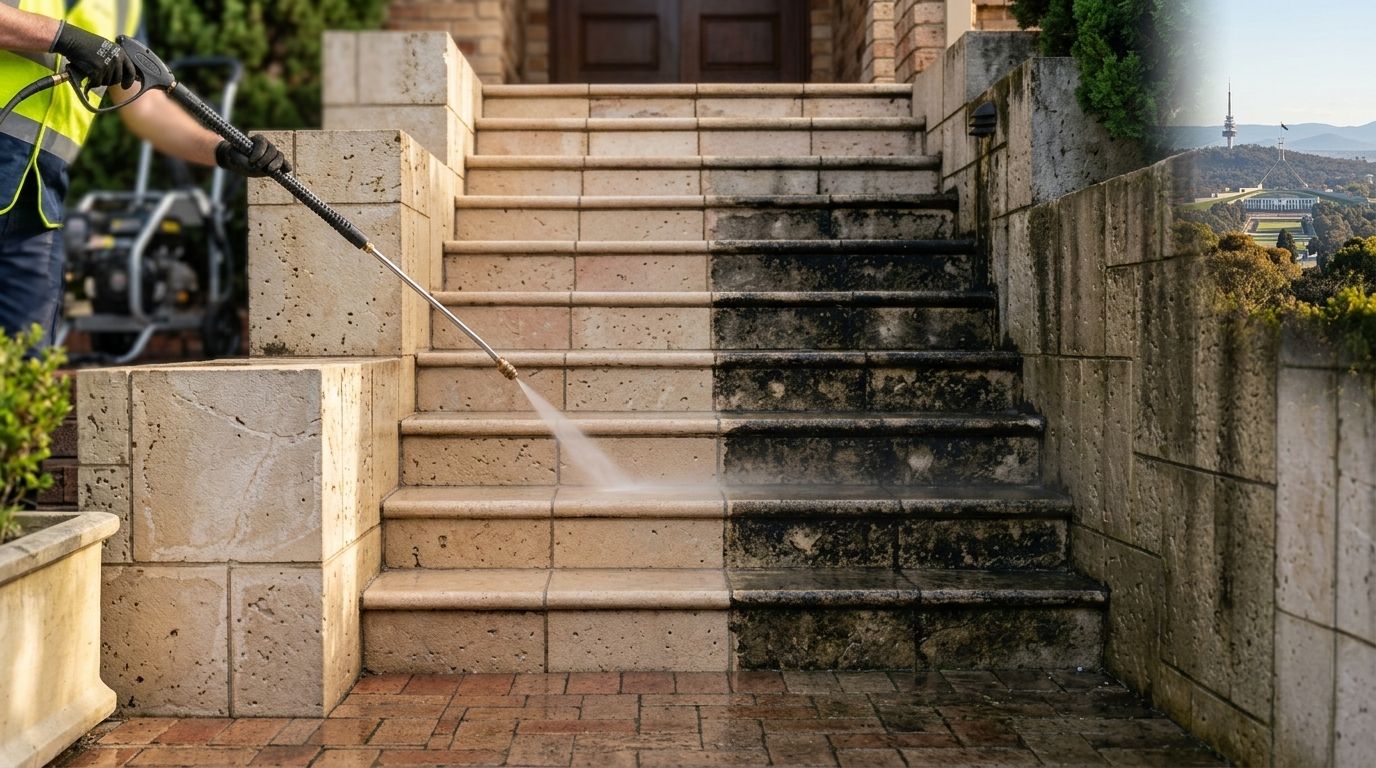
Canberra has a lot of exposed brick, painted render and sandstone-clad buildings, all surfaces that punish the wrong chemical or the wrong pressure setting. A professional service like Clear Jet's graffiti removal calibrates water pressure and temperature to the specific surface rather than applying one solvent to everything, and captures run-off so it doesn't end up in the stormwater system.
Clear Jet's graffiti removal pros:
- No etching or bleaching risk on porous surfaces when pressure and heat are matched correctly
- Handles multiple surfaces (paver, render, fence, roof) in one visit
- Compliant wastewater handling under ACT rules
- Works on both fresh tags and paint that's cured for weeks
Clear Jet's graffiti removal cons:
- Costs more upfront than a can of remover from the hardware store
- Needs scheduling rather than an instant same-hour fix
- Overkill for a single small tag you could scrub off yourself
Best for: brick, render, sandstone and heritage-listed surfaces where damage risk outweighs cost savings. Verdict: Hire.
Get graffiti off your walls this week
Professional pressure cleaning calibrated to your surface, not a one-size solvent.
2. Solvent-based gel remover: best graffiti removal product for metal and glass
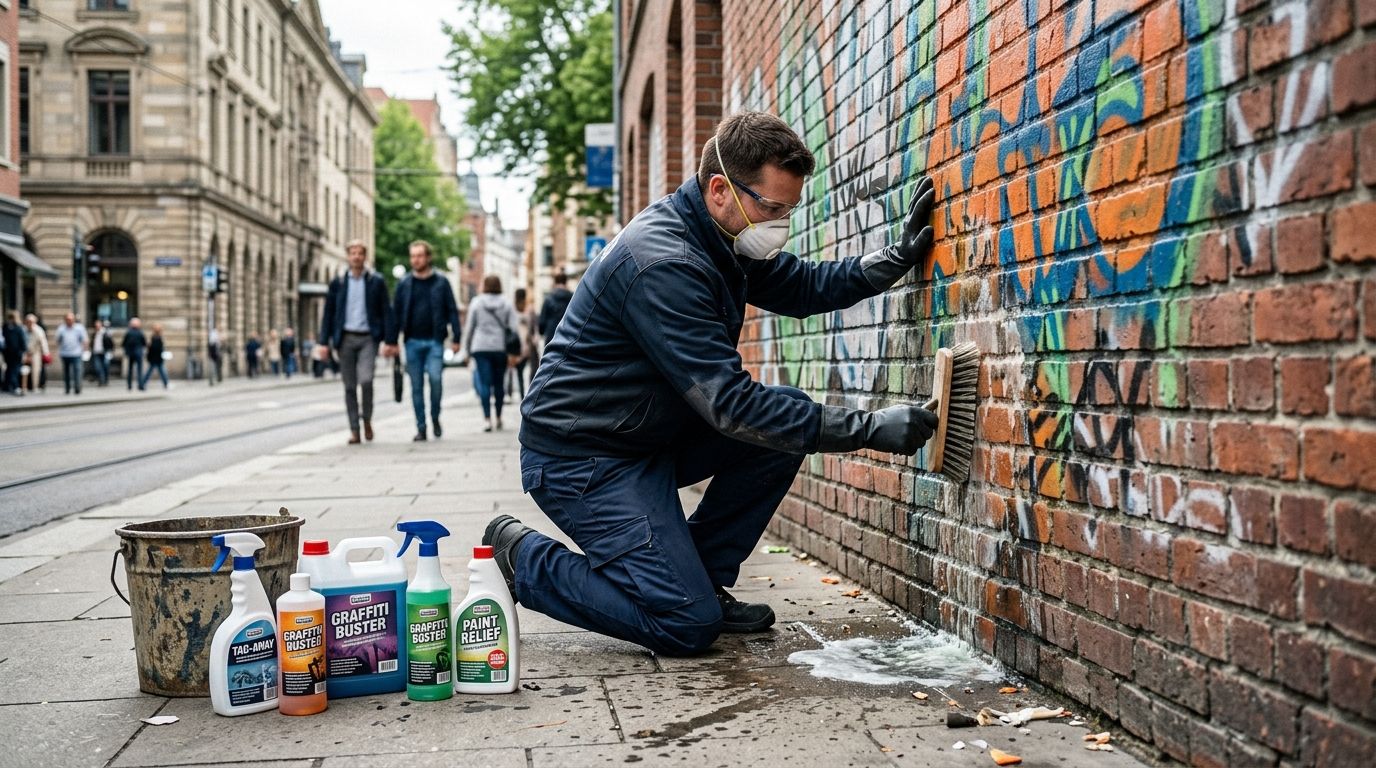
Gel-based solvent removers are built to cling to vertical, non-porous surfaces like Colorbond fencing, garage doors, street signage and glass. The gel dissolves acrylic and enamel spray paint on contact instead of running down the surface before it can work.
Solvent gel remover pros:
- Fast-acting, often lifts paint within minutes
- No water or equipment needed for small jobs
- Widely available at hardware stores
Solvent gel remover cons:
- Strong fumes require gloves and ventilation
- Can discolour some powder-coated finishes
- Not legal to rinse untreated into ACT stormwater drains
Best for: small metal and glass jobs, letterboxes, fences, signage. Verdict: Buy for isolated non-porous surfaces.
3. Citrus-based biodegradable remover: best graffiti removal product near waterways
D-limonene citrus solvents break down paint pigment with a lower chemical load than industrial strippers, which makes them the safer pick for properties backing onto creeks, ponds or anywhere run-off has a short path to a waterway.
Citrus remover pros:
- Lower toxicity, safer for repeated home use
- Works on both porous render and non-porous surfaces
- Easier to justify around gardens and pets
Citrus remover cons:
- Slower dwell time than solvent-based gels
- Cured graffiti often needs 2-3 reapplications
- Costs more per litre than generic solvents
Best for: waterway-adjacent homes and eco-conscious households. Verdict: Buy if run-off location is a concern.
4. Hot water pressure washing systems: best for large commercial walls
Commercial-grade hot water pressure systems strip paint off large masonry and concrete expanses far faster than a spray or gel ever could, which is why councils and commercial cleaners use them on underpasses, retaining walls and shopping precinct facades. If you're weighing up equipment for a bigger job, the best pressure washers for Canberra driveways guide breaks down what a unit needs to handle graffiti-scale surfaces versus a standard driveway clean.
Hot water pressure washing pros:
- Covers large surface area per hour
- Effective on aged or multiple-layer tags
- Pairs well with a citrus pre-treatment for stubborn paint
Hot water pressure washing cons:
- Equipment cost and weight rule out casual DIY use
- Needs an experienced operator to avoid surface damage from variable pressure
Best for: commercial walls, underpasses, large fence lines. Verdict: Hire for commercial scale; Skip for a single home DIY job.
5. All-purpose degreaser and brush: best budget graffiti removal for small tags
A kitchen or garage degreaser and a stiff brush will lift fresh, unsealed spray paint off smooth surfaces like painted timber fencing or plastic wheelie bins, provided you catch it within a day or two.
Degreaser and brush pros:
- Cheapest option on this list
- Usually already sitting in the shed
- No special disposal rules for small quantities
Degreaser and brush cons:
- Does nothing on paint cured longer than a few days
- No effect on porous brick or render
- Repeated scrubbing wears down painted or textured surfaces
Best for: same-day tags on smooth, non-porous surfaces. Verdict: Skip for anything older than 48 hours or on brick.
6. Anti-graffiti protective coating: best for repeat-offender sites
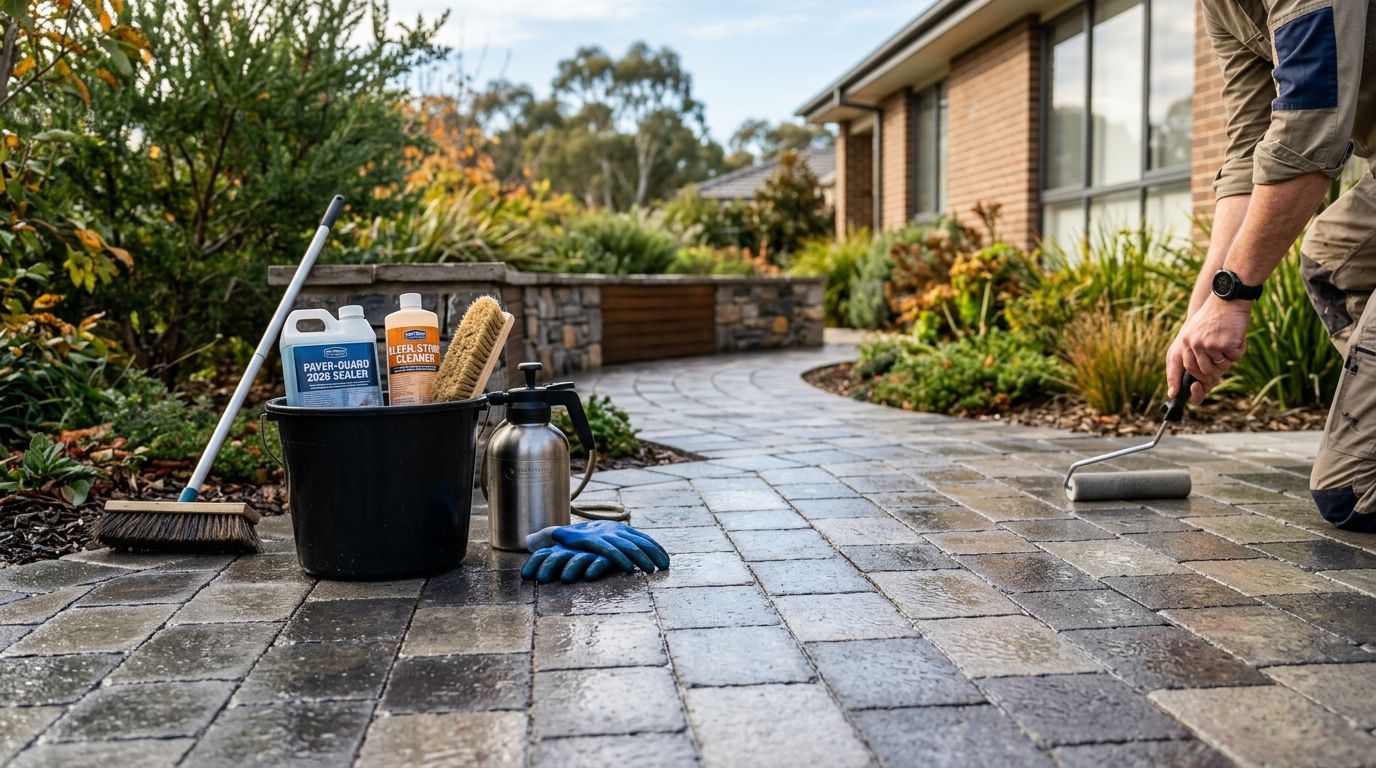
A sacrificial or permanent coating applied over a wall, fence or shopfront that's tagged more than once means the next spray paint job wipes off with water instead of another round of solvent or pressure work. If you're already sealing surfaces after a clean, the logic overlaps with the approach in the driveway sealers guide — a protective layer now saves a harder clean later.
Anti-graffiti coating pros:
- Cuts ongoing removal cost after the first professional clean
- Protects textured or heritage surfaces from repeat chemical exposure
- Works alongside any of the removal methods above
Anti-graffiti coating cons:
- Doesn't remove existing graffiti — the surface needs cleaning first
- Needs reapplication every few years
- Upfront application cost before any tagging even happens
Best for: walls and fences tagged more than once in 2026. Verdict: Buy for known repeat-offender locations.
How we ranked these
Each product or method was weighed against the six criteria above, in this order: surface compatibility first, because the wrong solvent or pressure setting on sandstone or render does more damage than the graffiti itself. Stormwater compliance came second, since several DIY solvents aren't legal to rinse into ACT drains untreated. Turnaround and recurrence cost decided the rest of the order.
Which graffiti removal product should you choose?
For most Canberra homes and businesses dealing with brick, render, sandstone or heritage surfaces, professional pressure cleaning removes the etching risk and handles disposal correctly — that's the default pick for 2026. Keep a solvent gel on hand for fresh tags on metal or glass between visits, switch to a citrus-based remover if your property backs onto a waterway, and add a protective coating once a site has been tagged twice.
FAQ
What's the best graffiti removal product for brick and render?
Professional pressure cleaning is the safest option for brick and render in 2026 because it calibrates pressure and heat instead of relying on one solvent for every surface. DIY chemical removers risk bleaching or etching porous render.
Is pressure washing safe for removing graffiti from sandstone?
Yes, when the pressure and water temperature are matched to the stone by an experienced operator. Untrained use of high pressure on sandstone can strip the surface and leave visible pitting.
Can I remove graffiti myself with household products?
An all-purpose degreaser and brush will lift fresh spray paint off smooth, non-porous surfaces within a day or two of tagging. It won't touch cured paint or work on brick and render.
Do anti-graffiti coatings stop taggers targeting my property?
Coatings don't deter taggers, but they mean the next tag wipes off with water instead of another chemical or pressure treatment. They're worth it once a site has been tagged more than once.
Is chemical graffiti remover safe to rinse into stormwater drains in the ACT?
Untreated solvent-based remover run-off isn't compliant with ACT stormwater rules on driveways and footpaths. Professional services capture and dispose of wastewater correctly.
How long does anti-graffiti coating last before reapplication?
Coatings typically need reapplication every few years depending on sun exposure and surface type. They protect the surface underneath, not the graffiti already on it.
What's the difference between solvent-based and citrus-based graffiti removers?
Solvent-based gels act faster on metal and glass but carry stronger fumes and stricter disposal rules. Citrus-based removers are lower toxicity but need more applications on cured paint.
How much does professional graffiti removal cost in Canberra?
Cost depends on surface area, surface type and how long the graffiti has been there, so get a direct quote rather than relying on a flat rate.
One last thing
The product you pick matters less than how quickly you act. Spray paint left on a sun-exposed wall for more than a couple of days starts curing into the substrate, which is why every method above works faster and cleaner on graffiti that's less than 48 hours old. If a tag has been sitting for weeks, budget for professional pressure cleaning rather than a can of gel remover — by then, a DIY product is more likely to smear the paint than lift it.